
Standard Range vs. Extended Range (ER): Scanning from the Warehouse Floor to the Rafters
Posted by Midwest Barcoding Solutions on Feb 8th 2026
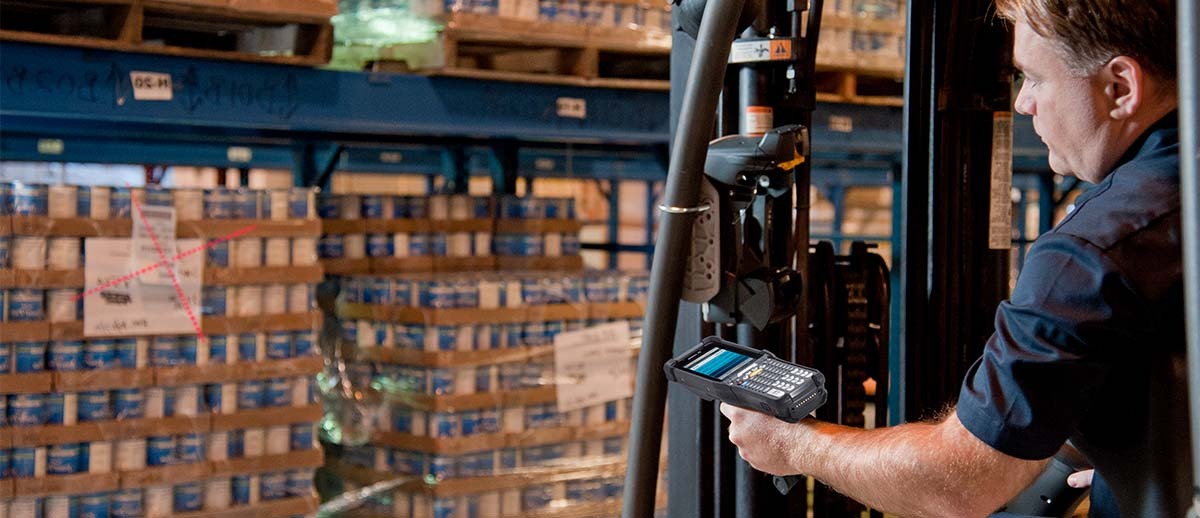
In the high-stakes environment of a modern distribution center, seconds are the primary currency. When a forklift operator has to stop, unbuckle, climb down from the cab, and walk twenty feet just to scan a pallet on a high rack, the operation isn't just losing seconds—it's hemorrhaging productivity. This is the fundamental challenge that separates Standard Range (SR) scanning from Extended Range (ER) and newer Auto-Range technologies.
Understanding the nuance between these ranges is about more than just distance; it is about matching the physical ergonomics of your workforce to the vertical reality of your warehouse. Whether you are managing a sprawling manufacturing floor or a high-density facility, choosing the right scanning engine determines whether your data capture is a seamless part of the flow or a constant bottleneck.
The Hardware: Mobile Computers vs. Barcode Scanners
Before diving into the optics, it is important to distinguish between the two primary tools used on the floor: the dedicated barcode scanner and the mobile computer.
- Barcode Scanners: These are peripheral devices. Their sole job is to capture a code and transmit that data to a host system, such as a laptop, a vehicle-mount terminal, or a tablet. These are common in high-volume "scan-and-go" stations, like a shipping dock where a worker is quickly processing outbound parcels.
- Mobile Computers: Devices like the Honeywell CK67 or Zebra MC9400 are complete workstations in the palm of your hand. They feature an integrated scan engine but also run a full operating system (Android), allowing workers to interact with a Warehouse Management System (WMS) in real-time. In manufacturing, mobile computers are the gold standard because they allow workers to confirm quantities and receive instructions without returning to a desk.
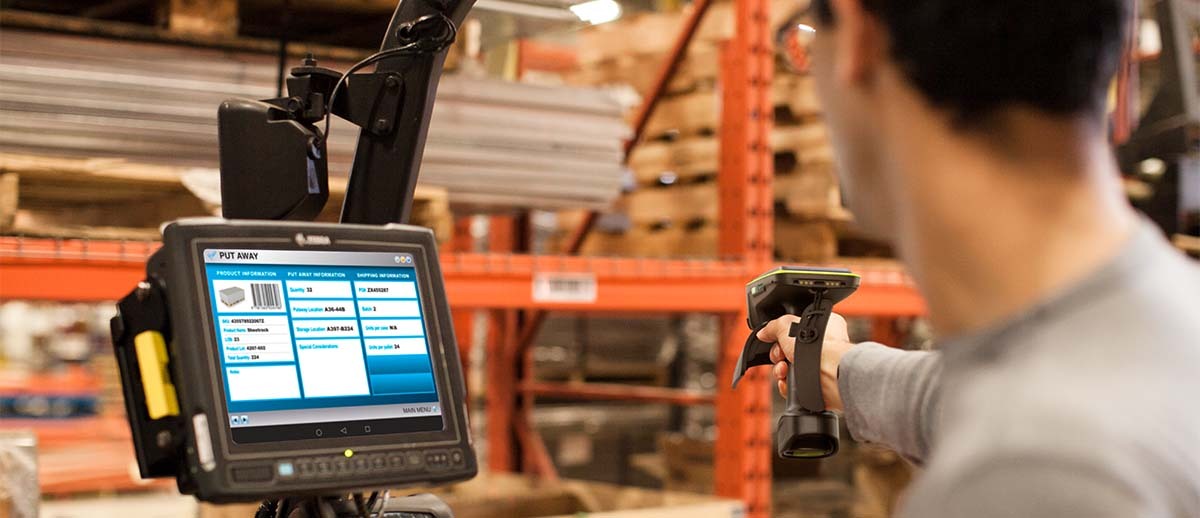
Distance and Depth: How Far Can You Really Read?
Standard Range (SR) scanners are the workhorses of the industry for close-proximity tasks. Typically, an SR engine is optimized for reading barcodes from a few inches up to about three feet away. These are perfect for "each picking" or assembly line verification where the barcode is always within arm's reach.
Extended Range (ER) and Ultra-Long Range (XLR) devices move into a different league. The latest generation of Honeywell devices, the CK62 and CK67, utilize the FlexRange™ XLR engine, which has redefined the limits of long-distance scanning:
- Standard Range (SR): Optimized for 1 inch to 3 feet.
- FlexRange™ XLR: Can reliably capture barcodes from 3 inches to a staggering 80 feet (24 meters) away.
This range isn't just about "power"; it's about optical focus. While standard scanners have a fixed focal point, long-range engines adjust focus dynamically. This allows a forklift driver to scan a "bin location" tag hanging from a 40-foot ceiling without ever shifting the vehicle into park.
Do Long-Range Scanners Need Special Barcodes?
While a long-range scanner can technically read a standard paper label, the laws of physics still apply. A tiny 1D barcode printed on a 4-inch shipping label becomes a blurry speck to a scanner 50 feet away.
To achieve maximum distance, industry leaders use Retro-Reflective labels. These specialized labels contain microscopic glass beads that reflect light directly back to the scanner’s lens with much higher intensity than standard matte paper.
Furthermore, the "mil size" (the width of the narrowest bar) must be scaled up. For 80-foot scans, a barcode typically needs to be printed with at least a 100-mil resolution. Using a standard 10-mil label for a 40-foot reach is a recipe for "no-reads" and worker frustration.
The "Close-Up" Problem: Can One Device Do It All?
A common concern for warehouse managers is the "sweet spot." Traditionally, if you bought a long-range scanner, it struggled to read a barcode three inches away because the focus was set for the distance.
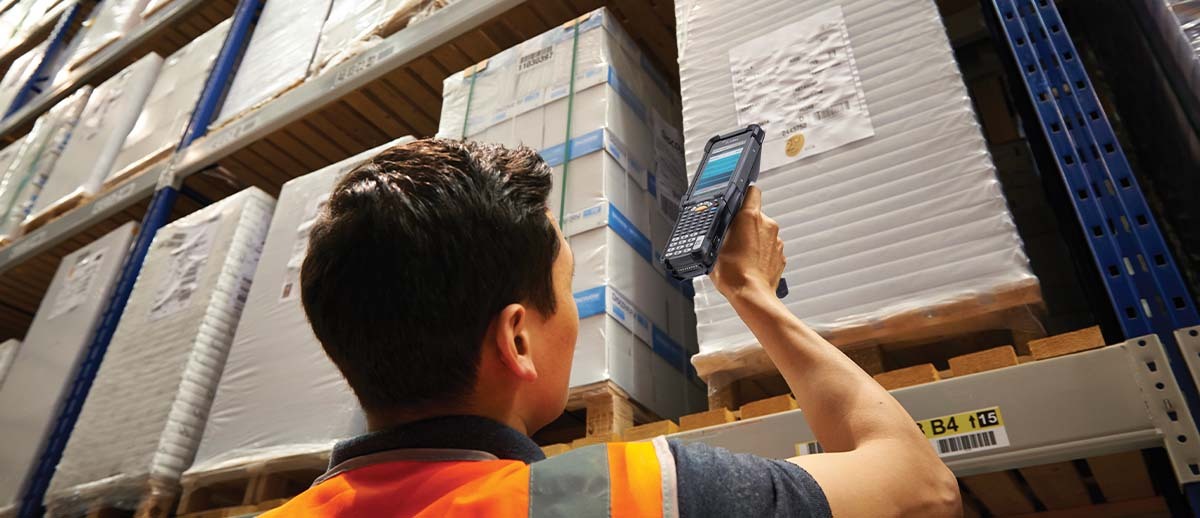
The newest Auto-Range engines—found in the CK62 and CK67—have solved this. These devices utilize a dual-optical system. One lens handles the "near" scan (the pick list in your hand) while the other handles the "far" scan (the rack in the rafters).
This means a single device provides a "zero-movement" transition. A worker can scan a serial number on a small box and immediately scan a pallet location at the top of a high-bay rack without switching tools.
Where Short Range Still Wins
If long-range devices can now read up close, why use standard range at all? The answer usually comes down to Speed and Field of View.
Standard range scanners are generally snappier for rapid-fire, repetitive scanning at arm's length. Because the engine doesn't have to "seek" focus across an 80-foot depth of field, the trigger-to-decode time is near-instant. Additionally, long-range scanners often have a narrower field of view to help aim at distant targets. If you are scanning a wide barcode from a very close distance with an XLR scanner, the beam might not be wide enough to cover the entire code.
Strategic Important Points for Your Deployment
When evaluating your facility, consider the Aiming Pattern. For long-range scanning, you want a device with a clear, bright "bullseye" or crosshair laser aimer. At 80 feet, a simple red dot is almost impossible for a human eye to track in a brightly lit warehouse.
Safety is the other major factor. Reducing the number of times a worker climbs in and out of a forklift reduces the risk of slips, trips, and falls—the leading cause of warehouse injuries. By equipping your fleet with CK67 mobile computers, you aren't just buying speed; you're buying safety.
Final Thoughts on Choosing Your Range
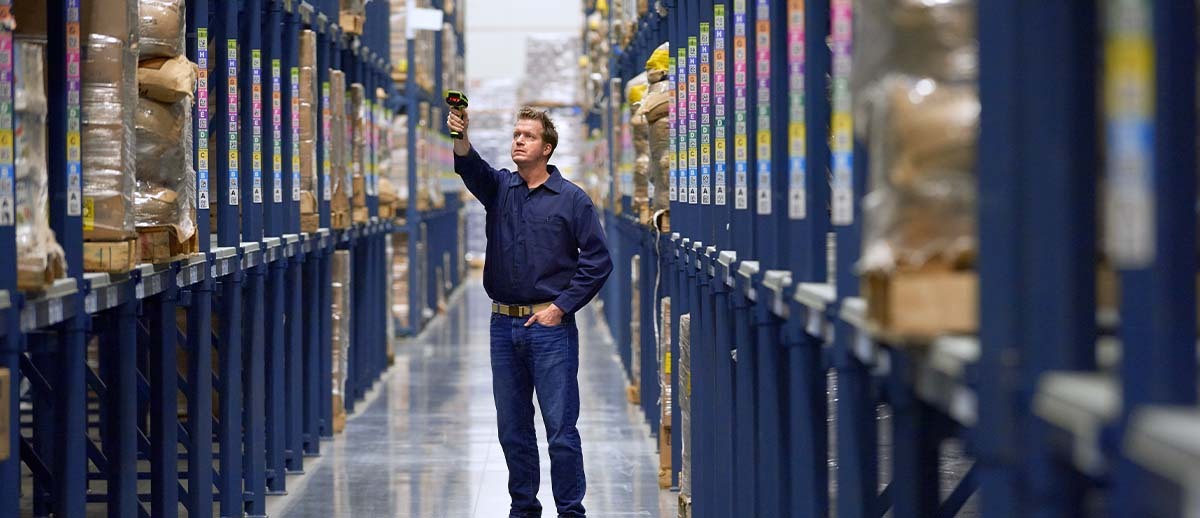
If your operation is entirely ground-level, Standard Range is your most cost-effective path. However, if your warehouse utilizes vertical space, the investment in FlexRange™ XLR technology is a foundational requirement for modern efficiency.
The ability to scan from the "floor to the rafters" without changing devices empowers your team to work at the speed of the modern supply chain. By pairing these powerful scan engines with the correct retro-reflective labeling, you create a seamless environment where data flows as fast as your inventory.