
Weatherproof Barcode & RFID Solutions for Outdoor Inventory
Posted by Midwest Barcoding Solutions on Jan 19th 2026

In the rugged world of lumber yards, construction sites, and outdoor industrial storage, traditional paper labels aren't just inadequate—they are a liability. Between the blistering summer heat, relentless UV exposure, and horizontal Midwest rain, a standard barcode can become unreadable in a matter of weeks. When your data fades, your inventory accuracy vanishes with it.
For Midwest Barcoding Solutions, "Tracking the Untrackable" is a challenge we solve every day. It is about matching the right high-performance material to the harshest environmental conditions. To maintain a truly efficient yard, you need to ensure your assets stay visible for years, not days.
The Triple Threat: Why Outdoor Labels Fail
Outdoor inventory faces a unique "team effort" of destruction. To choose the right solution, it is important to understand what you are fighting against:
- UV Degradation: UV rays break down the chemical bonds in standard inks and adhesives. This leads to "ghosting" (where the print disappears) or "brittling" (where the label cracks and flakes off).
- Moisture & Hydrolysis: Rain and humidity seep behind the lifting edges of adhesive labels. Once moisture gets between the label and the substrate, the bond is compromised, and the label eventually slides off or turns to pulp.
- Thermal Expansion: Metal beams and treated wood expand and contract as temperatures swing from sub-zero winters to 100-degree summers. If a label isn’t flexible or mechanically fastened, the sheer physical stress will pop it right off the surface.
To beat these elements, you must move beyond standard office-grade supplies and into industrial-grade durability.
High-Tech Fortification: RFID & Metal-Mount Labels
When you need to track high-value bundles, heavy equipment, or assets across a sprawling multi-acre yard without a direct line of sight, RFID (Radio Frequency Identification) is the gold standard.
- The Power of RFID Resilience
Unlike traditional barcodes that must be "seen" by a laser scanner, RFID tags use radio waves. This means a tag covered in thick mud, a layer of frost, or several inches of dust can still be read perfectly from several feet away. For a worker in a forklift during a snowstorm, this means they can scan an entire rack of inventory without ever leaving the cab. - Specialized Metal-Mount Technology
One of the biggest hurdles in outdoor tracking is "detuning." Standard RFID tags fail when applied directly to metal surfaces because the metal reflects the energy and interferes with the tag’s antenna.
We utilize specialized metal-mount RFID labels—engineered with a built-in synthetic spacer—that thrive on steel beams, heavy machinery, and metal-wrapped lumber packs. These aren't just stickers; they are ruggedized enclosures that protect the sensitive chip from impact and environmental stress.
Built for the Long Haul
Many of our metal-mount solutions are rated for 10+ years of outdoor exposure. They are designed to resist chemicals, saltwater, and extreme heat. If you are tracking assets that sit in the yard for years before being deployed, this is the only logical investment.
The Economical Powerhouse: Polyester "Hang-Hole" Tags
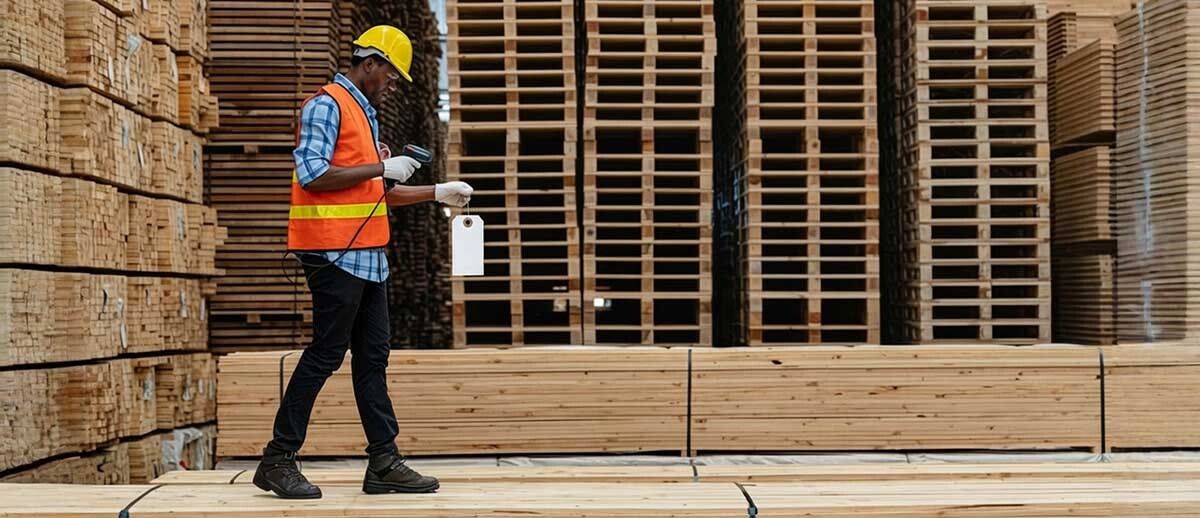
While RFID is incredible for high-value assets, not every piece of inventory—like individual treated 4x4s or bulk fencing—requires a microchip. For high-volume lumber, the most cost-effective and durable solution is often a polyester tag without adhesive.
Why Skip the Adhesive?
In a lumber yard, wood is often wet, sappy, or rough-hewn. Adhesives struggle to "wet out" on these uneven or chemically treated surfaces. By using a 10-mil or 12-mil polyester tag, you bypass the adhesive problem entirely.
- Mechanical Fastening: These tags are attached using a heavy-duty staple, a wire tie, or a plastic fastener through a pre-punched "hang-hole." This ensures the tag stays with the product even if the surface is oily, frozen, or covered in sawdust.
- Tear-Proof Composition: Industrial-grade polyester is virtually impossible to tear by hand. It won't "flag" or flutter away in high winds, a common failure point for thinner plastic wraps or paper-based tags.
- Thermal Transfer Integration: When paired with a high-resin thermal transfer ribbon, the print is "locked" into the polyester. This makes the barcode impervious to rain and prevents the "sun-bleached" look that renders cheaper tags useless after a single season.
Proposing the Right Materials: A Deeper Look
Choosing a tag isn't just about "plastic vs. paper." The chemistry of the material determines its lifespan. Here are three specific materials we recommend for yard storage:
- Top-Coated Polyester (PET): This is the workhorse of the lumber industry. The top coating is specifically designed to grab hold of resin ribbon ink, making it scratch-resistant and smudge-proof even when bundles are being moved and rubbed against one another.
- Polyimide (Kapton) Alternatives: For environments involving extreme heat (such as kiln-drying processes or proximity to heavy engines), polyimide materials can withstand temperatures that would melt standard plastics, ensuring the identity of the product stays intact throughout the entire manufacturing and storage cycle.
- Cross-Laminated Polyolefin: If you are tagging heavy cables or pipe, this material offers "multi-directional" strength. It is incredibly flexible, meaning it won't snap when wrapped around a tight diameter, and it offers superior chemical resistance against oils and greases.
The Top 3 Questions to Ask Before Buying
If you are managing an outdoor yard, you shouldn't just buy the cheapest label on the shelf. Ask these three critical questions to determine your actual requirements:
1. What is the Surface "Energy" and Texture?
Is the label going on smooth, powder-coated steel, or is it going on rough, wet pressure-treated pine? Rough surfaces require thicker adhesives (high-tack) or, better yet, no adhesive at all (staple-on tags). If the surface is "low energy" like many plastics or oily metals, standard adhesives will simply peel off like a sticky note.
2. What is the "Scan-Distance" Requirement?
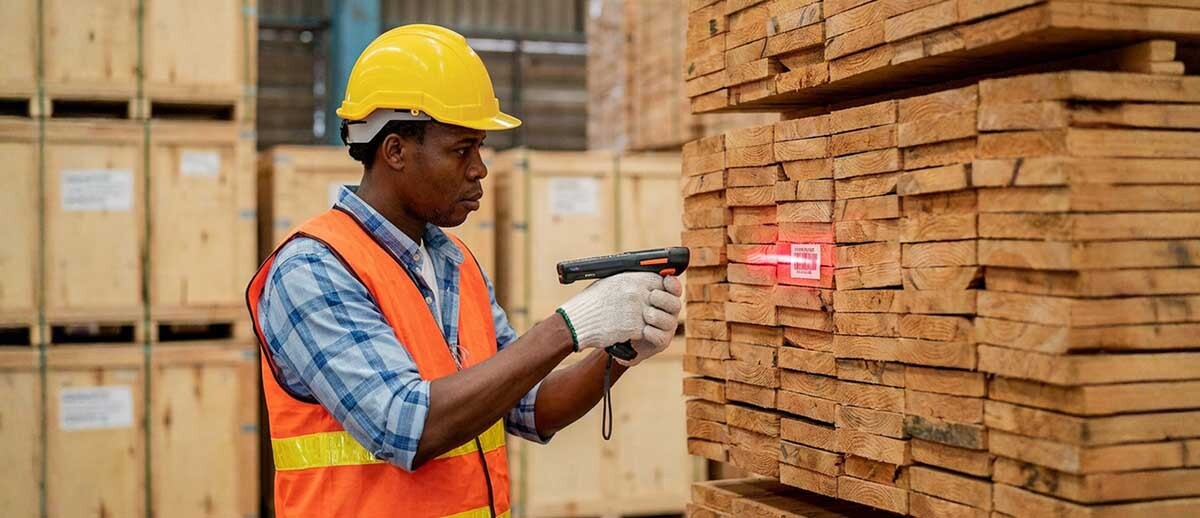
Does your team need to scan items while standing right next to them, or are they scanning bundles high up on a rack from a forklift? If you need distance, you need either Retro-Reflective Barcode Labels (which bounce light back to the scanner from up to 50 feet away) or an RFID solution.
3. What is the "Life-to-Grave" Timeline?
Does this tag only need to last for a three-week transit, or will this lumber sit in a regional distribution yard for two years? A "cheap" tag that fades in six months will cost you thousands in labor hours when your team has to manually re-identify and re-label thousands of units. Always solve for the maximum possible duration of exposure.
Finding the "Untrackable"
Tracking inventory in a Midwest winter or a humid summer shouldn't be a guessing game. Whether you need the sophisticated reach of RFID for your fleet or the rugged simplicity of a stapled polyester tag for your timber, the goal remains the same: Total visibility from the yard to the customer.
At Midwest Barcoding Solutions, we don't just sell labels; we provide a bridge between your physical inventory and your digital records. We understand that in the lumber and outdoor storage industry, if you can’t scan it, you don’t own it.
Talk to an Expert