
Honeywell FlexRange vs. Zebra Extended Range: Who Wins the 80-Foot Scan Challenge?
Posted by Midwest Barcoding Solutions on Apr 17th 2026
By Midwest Barcoding Solutions | Mobile Computers | Extended Range Scanner Comparison
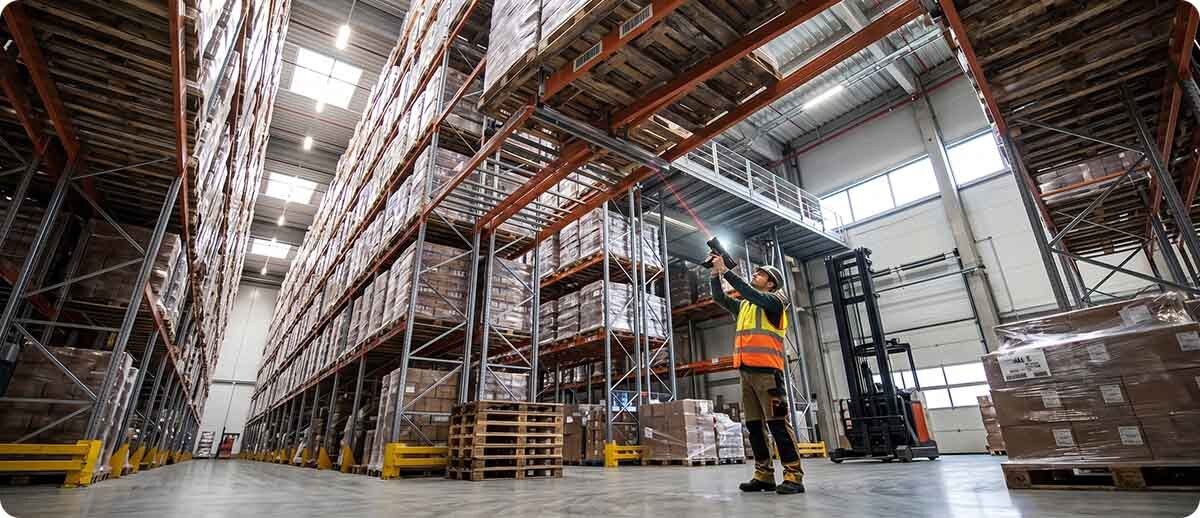
Extended range scanning sounds like a simple spec: distance is distance. But the number on the data sheet doesn't tell you how the engine performs at the near end, how well the aimer works in bright ambient light, how the device holds up in the environment where it needs to scan from 80 feet, or what happens to productivity when the scanning workflow shifts from short-range picking to long-range verification. Two different technology approaches — and two different device platforms — can both hit the same headline number and deliver meaningfully different operational results.
This comparison covers both scan engines in depth, the devices that carry them, how the specs translate to real-world warehouse and yard scenarios, and where each platform earns its position over the other. The goal isn't a winner-takes-all verdict — it's a clear map of which operation should choose which platform, and why.
The Technology: Two Approaches to the Same Problem
Before comparing specs, it helps to understand how each engine actually achieves extended range — because the engineering approach explains both the strengths and the limitations of each platform.
Honeywell FlexRange: Dual-Lens, No Moving Parts
Honeywell's FlexRange architecture uses two physically separate lenses in a single scan engine module — a wide-angle near lens and a narrow-angle far lens — both feeding the same image sensor simultaneously. The engine captures two overlapping fields of view in every scan event and uses software (Honeywell's Smart Adaptus 8.0 technology) to determine which focal region contains the barcode, decode it, and return the result. No mechanical focus adjustment, no refocus delay between near and far. The system is entirely solid-state.
The N6803FR FlexRange (the standard FlexRange, found in the CK65 and CT47) delivers this dual-lens capability from 60mm (2.3 inches) to 10m (30 feet). The S0803 FlexRange XLR — the extended variant — pushes the far lens out to 24m (80 feet) while maintaining the near-end capability from 76mm (3 inches). Same fundamental dual-lens architecture, extended far optic.
The practical implication of no moving parts: instantaneous switching between near and far distance without any mechanical delay. A worker scanning shelf labels at arm's length can immediately scan a pallet label at 40 feet without pausing, repositioning, or waiting for the engine to refocus. The transition is seamless because there's nothing mechanical to transition.
Zebra SE58: Dual-Sensor IntelliFocus with Variable Far Focus
Zebra's SE58 takes a different path. It uses two dedicated image sensors — a 1MP fixed-focus sensor optimized for near-range scanning (in-hand through mid-range) and a 2MP variable-focus sensor for extended range. The variable focus on the far sensor is what enables the SE58's headline capability: scan performance from in-hand contact to over 100 feet (30.5m), with Zebra claiming this is "substantially farther than any scanner on the market."
Zebra's IntelliFocus technology manages the coordination between sensors and the variable focus mechanism — determining which sensor is active based on distance, adjusting focus on the far sensor for the target barcode's distance, and delivering the decoded result. The engine weighs only 10.6 grams and is 50% lighter and 18% smaller than previous-generation extended range engines, enabling its integration into the MC9400's pistol-grip form factor without adding bulk.
The 2MP far sensor is the key to the SE58's distance advantage. Higher resolution at distance means the engine can resolve smaller barcode elements at the extremes of its range — a 100 mil Code 39 at 105 feet, a 55 mil QR code at 24 feet. The variable focus mechanism adds complexity relative to a fixed dual-lens system, but in exchange delivers meaningfully greater maximum range.
The Numbers Side by Side
| Specification | Honeywell N6803FR FlexRange | Honeywell S0803 FlexRange XLR | Zebra SE58 IntelliFocus |
|---|---|---|---|
| Near range | 60mm / 2.3" | 76mm / 3" | In-hand contact |
| Far range (typical) | 10m / ~30ft | 24m / 80ft | 30.5m / 100ft+ |
| Far range (100 mil Code 39) | ~30ft | ~80ft | 105ft / 32m |
| Architecture | Dual-lens, single sensor, no moving parts | Dual-lens, single sensor, no moving parts | Dual-sensor (1MP near + 2MP far), variable focus |
| Aimer | 650nm laser dot | Green laser | Green laser (7x more visible than red) |
| Near-to-far switch | Instant (solid-state) | Instant (solid-state) | Fast (sensor-switch + variable focus) |
| Primary device (MBS) | Honeywell CK65, CT47 | Honeywell CK65 (Cold Storage) | Zebra MC9400 |
| Form factor | Touch + keypad (brick/gun optional) | Touch + keypad (brick/gun optional) | Pistol grip |
The Devices: What Carries Each Engine at MBS
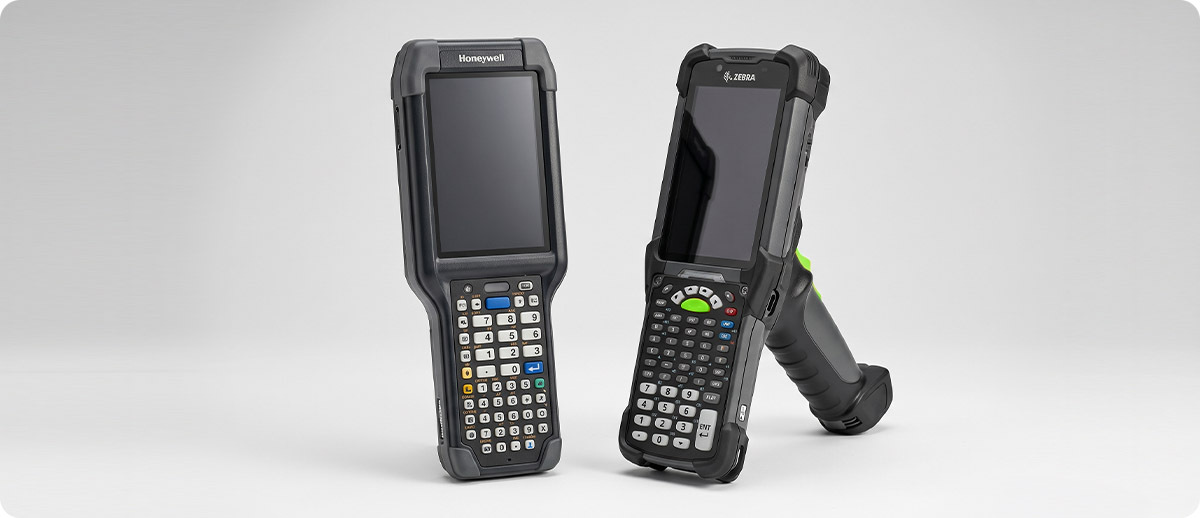
Honeywell CK65 — The FlexRange Platform
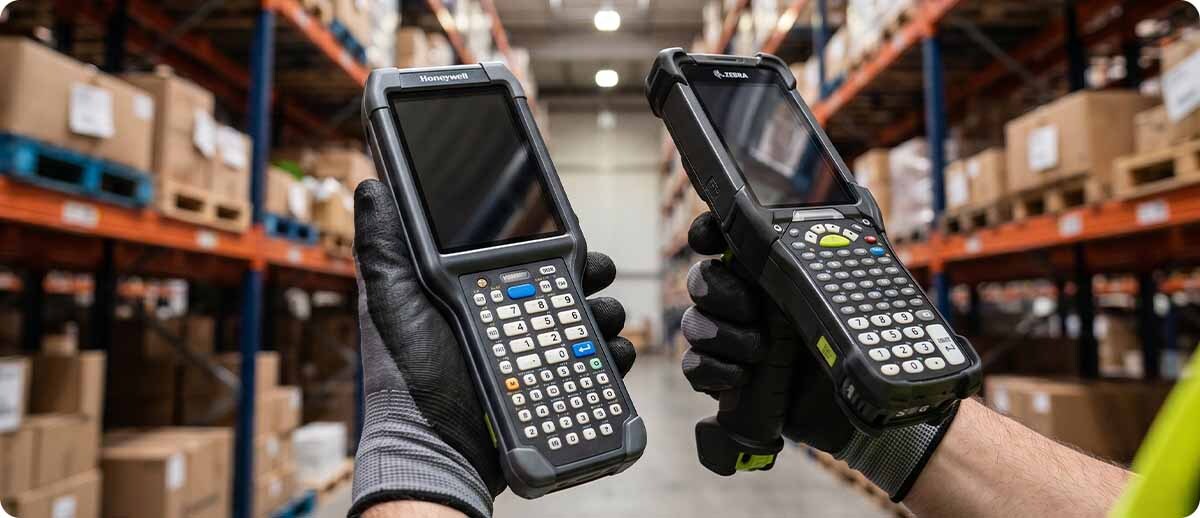
The CK65 is Honeywell's primary ultra-rugged mobile computer and the main host for both FlexRange variants. It's available with three scan engine options — N6703SR standard range, N6803FR FlexRange (30ft), and S0803 FlexRange XLR (80ft) — giving buyers a clear upgrade path as range requirements grow. Three drop spec to concrete (10 feet), 3,000 tumbles at 3.3 feet, IP65/IP68. Up to 28-hour battery life on a 7,000 mAh pack. Qualcomm Snapdragon 660 octa-core. Android with Honeywell's Mobility Edge platform ensuring support through multiple Android versions. Available in standard, cold storage, disinfectant-ready, and non-incendive configurations.
Keypad-centric: the CK65 ships with alphanumeric, numeric function, or large numeric keypads, with full touchscreen on all models. This is the key form-factor difference from the MC9400 — the CK65 is designed for workers who need both touch and physical keypad access, whether for legacy terminal emulation apps or high-speed data entry in picking and receiving. The optional scan handle converts the brick-style CK65 to a pistol-grip configuration when needed.
Honeywell CK65 with N6803FR FlexRange (30ft)
CK65-L0N-D8C215F | Numeric-F keys, 4GB/32GB, camera, GMS, disinfectant-ready
CK65-L0N-B8C214F | Alphanumeric, 4GB/32GB, N6803FR, camera, standard
CK65-L0N-B8C215F | Alphanumeric, 4GB/32GB, N6803FR, camera, disinfectant-ready
Honeywell CK65 with S0803 FlexRange XLR (80ft)
CK65-L0N-BLC212F | Alphanumeric, S0803 FlexRange XLR, camera, Cold Storage
Honeywell CT47 — FlexRange in a Touch-First Form Factor
The CT47 brings FlexRange to Honeywell's touch-first enterprise mobile computer — 5.5-inch display, Qualcomm QCM6490, Wi-Fi 6E and 5G, guaranteed support through Android 15. The CT47 with FlexRange green laser (CT47-X0N-58D100G) targets workflows where a larger screen and touch-optimized UX are preferred over keypad-centric data entry — receiving, inspection, or cross-dock environments where workers interact primarily with a WMS or scanning app rather than typed data entry. The FlexRange engine in the CT47 provides the same dual-lens near/far capability in the CT47's slimmer form factor.
Honeywell CT47 with FlexRange — MBS Product
CT47-X0N-58D100G | Wi-Fi 6E, no SIM, 5.5" touchscreen, 8GB/128GB, FlexRange green laser, front and rear cameras, standard battery, GMS, IP65/IP68
Zebra MC9400 — The SE58 Platform
The MC9400 is the direct successor to the MC9300 and the flagship of Zebra's ultra-rugged mobile computer lineup — nearly five million MC9000 series devices in the field before it. The MC9400 with SE58 is where Zebra puts its maximum scanning performance: in-hand to 100 feet, green laser aimer 7x more visible than red, 2.5x more processing power than the MC9300 on the latest Qualcomm platform, 6GB/128GB, Wi-Fi 6E, and private and public 5G. Enterprise drop standard of 8 feet to concrete across temperature range (-20°C to 50°C), IP65/IP68.
The MC9400 is a pistol-grip device — the trigger-fired form factor that ergonomically supports sustained scanning at distance. Workers pointing a pistol grip upward at rack labels 40 feet overhead are using an arm position the pistol grip is specifically designed to support. It's also fully backward compatible with all MC9300 accessories, meaning operations upgrading from MC9300 fleets carry their cradle, holster, and charging infrastructure forward. PowerPrecision+ 7,000 mAh battery with BLE battery intelligence. Android 17 support committed. Freezer, standard, and non-incendive (Class 1 Div 2) configurations available.
Zebra MC9400 with SE58 Extended Range
MC9401-0G1M6DSS-NA | Wi-Fi 6E, SE58, 4.3" display, 6GB/128GB, 53-key standard, 7000mAh, standard environment
MC9401-0G1M6ESS-NA | Wi-Fi 6E, SE58, 4.3" display, 6GB/128GB, 53-VT key, 7000mAh, standard environment
MC9401-0G1M6DCS-NA | Wi-Fi 6E, SE58, 4.3" display, 6GB/128GB, 53-key, 5000mAh, Cold Storage
MC9401-0G1R6DSB-NA | Wi-Fi 6E, SE58, 8MP + 16MP cameras, 4.3" display, 6GB/128GB, 53-key, 7000mAh BLE battery
Note: The Zebra MC9300 with SE4850 (MC930B-GSEDG4NA, MC930B-GSEEG4NA) is the previous generation extended range platform on MBS, discontinued and now superseded by the MC9400. SE4850 delivers approximately 70 feet of range — the SE58 in the MC9400 is a meaningful generational step up.
Where Each Platform Wins: Scenario by Scenario
Scenario 1: High-Bay Warehouse Racking (35–80 ft. to top shelf)
This is the classic extended range use case — a distribution center or manufacturing warehouse with racking between 30 and 60 feet high, requiring workers to scan pallet or location labels at the top of the rack without a lift.
At 35-50 feet: Both the FlexRange XLR (80ft max) and the SE58 (100ft+ max) handle this comfortably. The operational difference at this distance is in the aimer — both now use green lasers, which are significantly more visible than red in high-ambient-light warehouse conditions. At 35-50 feet against a ceiling, the green laser aimer on both platforms makes targeting practical. No meaningful winner at this distance range — both platforms are qualified.
At 60-80 feet: The FlexRange XLR is at its rated maximum. The SE58 has 20+ feet of headroom above this distance. For warehouses with rack heights at or near 80 feet, the SE58's additional range buffer matters — operating a scanner at its absolute specification limit versus operating it well within rated range is a meaningful difference in first-scan success rate and consistency.
Above 80 feet: SE58 only. The FlexRange XLR's spec ceiling is 24m/80ft. Operations with extreme rack heights above 80 feet have one choice in this comparison.
Verdict for this scenario: Tie at 35-50ft. SE58 advantage at 60-80ft. SE58 exclusive above 80ft.
Scenario 2: Mixed Workflow — Close-Range Picking + Occasional Long-Range Verification
Many operations don't need 80-foot scanning all shift — they need it occasionally. A picker moving through a warehouse might do 95% of their scans at arm's length (2-3 feet) and 5% at 20-40 feet for rack confirmation or cross-dock staging verification. The question for this scenario is how the engine handles both ends of the range in rapid alternation.
The FlexRange XLR's solid-state dual-lens architecture is specifically engineered for this: no refocus delay, no mechanical action between near and far. The engine simultaneously captures both focal regions and decodes whichever one contains the barcode. A worker scanning a handheld label at 6 inches immediately followed by a rack label at 40 feet experiences no mode switch, no button press, no hesitation. This is where Honeywell's no-moving-parts architecture has a genuine operational advantage — maximum throughput in mixed-distance workflows.
The SE58's variable far sensor focus is fast, but it's not instantaneous in the same sense. The near sensor handles close-range scans and the far sensor with variable focus handles extended range — the transition between the two involves sensor switching and focus adjustment. For most users in most environments this is imperceptible, but in extremely rapid alternation between very near and very far distances, the FlexRange XLR's solid-state design is architecturally faster.
Verdict for this scenario: FlexRange XLR advantage in rapid near/far alternation workflows. SE58 advantage if maximum far range is also required.
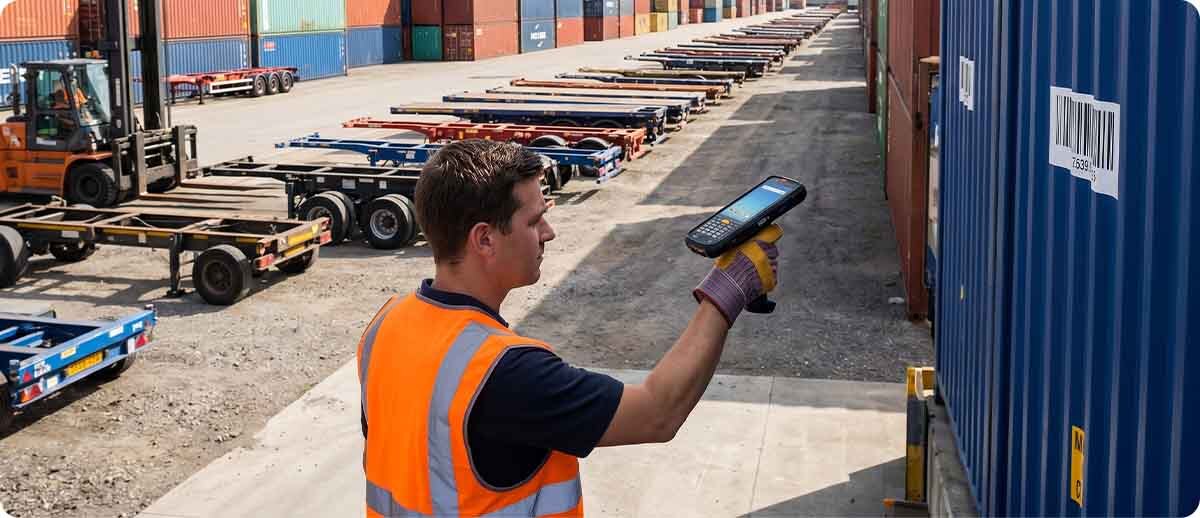
Scenario 3: Outdoor Container Yards and Cross-Dock Staging
Outdoor yards present the toughest environmental challenge for extended range scanning: variable ambient lighting (direct sun to overcast), vibration from vehicle traffic, wider temperature range, and labels on containers or trailers that may be at varying distances from 10 to 60+ feet.
Both platforms carry strong environmental ratings — the CK65 and MC9400 are both IP65/IP68 and rated for temperature ranges that cover outdoor use. The green laser aimer on both the FlexRange XLR and the SE58 is a critical outdoor advantage — green is significantly more visible than red in daylight conditions, making it practical to aim at a container label 40 feet away in full sun. Both platforms are qualified here on environmental and aimer grounds.
For operations where labels on containers may be at distances the FlexRange XLR can't reach — containers staged in deep rows in a rail yard or container depot — the SE58's additional 20+ feet of range becomes operationally significant. Zebra specifically cites ports and yards as MC9400 environments, and the SE58's distance capability was partly designed around the scanning distances these facilities require.
Verdict for this scenario: Both qualified for standard outdoor yard use. SE58 advantage in deep container yards where distances regularly exceed 80 feet.
Scenario 4: Cold Storage and Freezer Environments
Both Honeywell and Zebra offer cold storage configurations — the CK65 with FlexRange XLR is available in a cold storage model (CK65-L0N-BLC212F), and the MC9400 cold storage (MC9401-0G1M6DCS-NA) includes a heated scanner exit window and touch panel plus a 5,000 mAh freezer-rated battery.
For cold storage operations where extended range scanning is needed — scanning pallet labels on high freezer racking without bringing a lift into temperature-controlled space — both platforms are available in the appropriate cold storage configuration. The battery difference is worth noting: the CK65 cold storage models retain their up-to-28-hour battery rating (with a 5,200 mAh cold storage battery). The MC9400 cold storage uses a 5,000 mAh battery, rated for the cold environment.
Verdict for this scenario: Both platforms fielded in cold storage extended range configurations. Selection depends on rack height and preferred device form factor.
Scenario 5: Legacy Application Support and Keypad-Heavy Workflows
This is where the device platform matters as much as the scan engine. Operations running terminal emulation (telnet, RDP, or VT/TN3270 sessions) against legacy WMS or ERP systems — common in large distribution, third-party logistics, and manufacturing — need physical keypads that enable fast data entry without touchscreen precision. The CK65's keypad-first design, with multiple keypad configurations and physical keypad scan buttons, is purpose-built for this. Honeywell's Mobility Edge platform also provides extended Android version support commitments for lifecycle-conscious IT organizations.
The MC9400 has a keypad (53 or 58 key configurations available) and supports terminal emulation, but the device is fundamentally a pistol-grip touch computer — optimized for scan-centric workflows over heavy manual data entry. For operations where the scan engine's extended range is needed but the workflow is also keypad-intensive, the CK65 with FlexRange XLR is the more natural fit.
Verdict for this scenario: CK65 with FlexRange XLR advantage for keypad-intensive workflows requiring extended range.
The Honest Answer to the 80-Foot Challenge
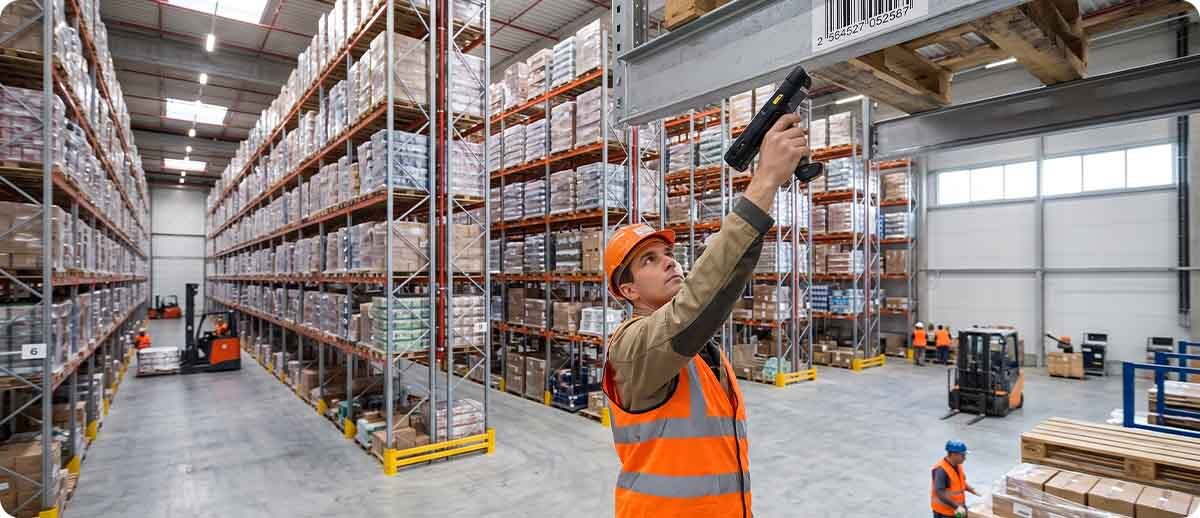
Both platforms clear 80 feet. But they clear it differently, and that matters depending on your actual maximum scan distance and workflow mix.
The Honeywell FlexRange XLR on the CK65 wins when: your maximum required scan distance is at or under 80 feet, your workflow involves rapid alternation between near-range and far-range scanning, your workers need keypad-centric data entry in addition to scanning, or your operation runs existing Honeywell infrastructure (Mobility Edge devices, enterprise software, accessories) that CK65 compatibility extends.
The Zebra SE58 on the MC9400 wins when: your maximum required scan distance is above 80 feet (up to 100+ feet), your operation is in ports, yards, or container facilities where extreme-distance scanning is a core daily requirement, you're upgrading from an MC9300 fleet and want full accessory backward compatibility, or you need the MC9400's non-incendive (Class 1 Div 2) configuration for hazardous material environments.
There is no bad choice between these two platforms — both represent the current generation of best-in-class extended range scanning. The decision comes down to where your actual scan distances land, what your workflow mix looks like between near and far, and which device platform fits your existing enterprise environment and form factor requirements.
Frequently Asked Questions
Can I get the Honeywell CK65 with the 80-foot FlexRange XLR engine in a non-cold-storage configuration?
On MBS, the CK65-L0N-BLC212F (FlexRange XLR) is currently stocked in the cold storage configuration. The N6803FR FlexRange (30ft) is available in standard, disinfectant-ready, and other configurations. For standard-environment FlexRange XLR configurations, contact our team — we can source additional CK65 FlexRange XLR configurations or discuss whether the CK67 (the CK65's successor with Wi-Fi 6E and 5G) better fits your requirements.
Should I still consider the Zebra MC9300 with SE4850 over the MC9400?
The MC9300 with SE4850 (MC930B-GSEDG4NA) is discontinued and its MBS listings now refer to the MC9400. The SE4850 delivers approximately 70 feet of range — the SE58 in the MC9400 is a meaningful step up at 100+ feet, and the MC9400 also delivers 2.5x more processing power, Wi-Fi 6E, 5G, and significantly more memory. For any new deployment, the MC9400 is the correct specification. MC9300 accessories are fully compatible with the MC9400 with no adapters required, making the upgrade operationally straightforward for existing MC9300 fleets.
Does the Honeywell CT47 with FlexRange match the CK65 FlexRange XLR for distance?
The CT47-X0N-58D100G carries the N6803FR FlexRange with green laser — this is the standard FlexRange engine rated to 30 feet, not the XLR engine rated to 80 feet. The CT47 is appropriate for mixed near/mid-range workflows where 30 feet covers the maximum required scan distance. For workflows requiring 80-foot scanning, the CK65 with FlexRange XLR (S0803) or the MC9400 with SE58 are the correct specifications. The CT47 wins in form factor for touch-first workflows within its 30-foot range ceiling.
What's the real-world first-scan success rate difference at 60-80 feet between FlexRange XLR and SE58?
Published first-scan success rate data at specific distances isn't available in manufacturer spec sheets — both Honeywell and Zebra state maximum range under controlled conditions (200 lux ambient, specific barcode density). In practice, operating either engine near its maximum spec introduces more sensitivity to label print quality, label orientation, ambient lighting, and barcode density. At 60-70 feet, the FlexRange XLR is within spec; at 80 feet, it's at its stated limit. The SE58 at 80 feet is operating with 20+ feet of headroom below its maximum. That headroom generally translates to better scan consistency at 80 feet — the SE58 isn't working as hard at that distance as the FlexRange XLR is.
Can I use both platforms in the same facility if my operation has different areas with different requirements?
Yes, and this is a common deployment pattern. CK65 FlexRange XLR units covering the main warehouse floor with mixed picking and rack verification workflows, MC9400 SE58 units assigned to the yard or cross-dock where extreme-distance scanning is the primary task. Both platforms run Android, both support enterprise MDM solutions (Honeywell Mobility Edge and Zebra Mobility DNA both integrate with standard EMM tools), and both connect to standard Wi-Fi enterprise infrastructure. Mixed fleets are operationally straightforward if your MDM and label software are configured for each device type.
Extended range is one of the more technically nuanced purchasing decisions in mobile computing — the spec sheet distance number is the starting point, not the whole story. If you'd like to walk through your specific rack heights, scan distances, and workflow mix before deciding between these platforms, our team has run this evaluation many times across warehouse, manufacturing, and yard environments. Fill out the form below and let's figure out which platform is actually right for your operation.