
The Real Cost of a Dropped Device: Why Rugged Hardware Pays for Itself Faster Than You Think
Posted by Midwest Barcoding Solutions on Jul 7th 2026
By Midwest Barcoding Solutions | Rugged Hardware | Total Cost of Ownership Guide
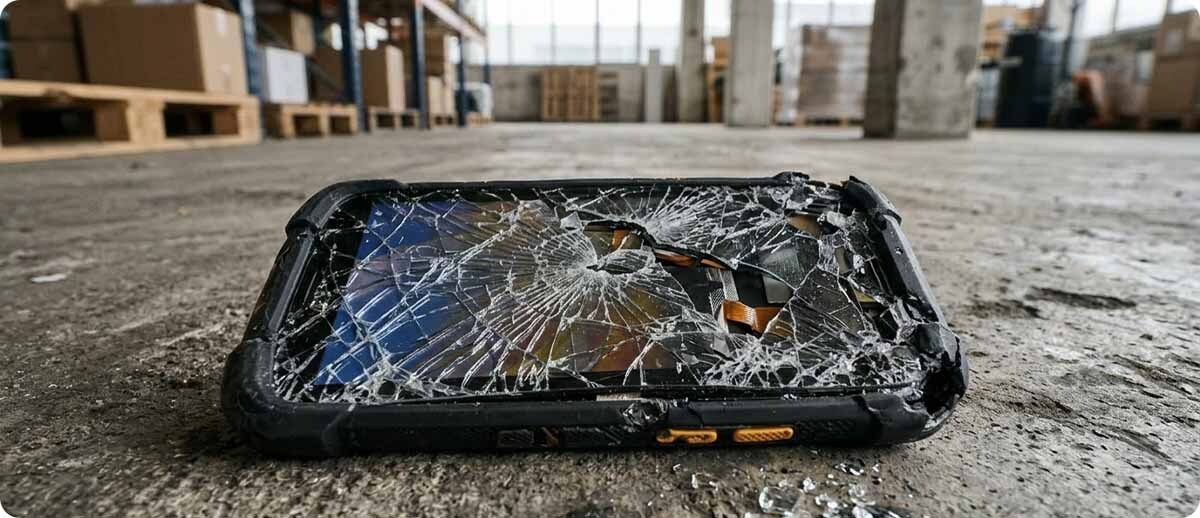
We talk to operations managers about this pretty regularly, usually right after something breaks. Someone dropped a scanner, or a device screen cracked, or a phone that seemed like a reasonable budget solution is on its third screen replacement in eighteen months and the team has started keeping a spare ready at all times because they've learned it's going to fail. By that point the math has already done itself, it just took a while to show up on a spreadsheet anyone was paying attention to.
This is a look at what a dropped or failed device actually costs when you count everything, and where the break-even point is between buying cheap and buying rugged.
The Real Cost of a Dropped Device
Most people think of a dropped device as a repair bill. That's the visible cost. The less visible cost is everything that happens around the break itself.
Research from VDC cited by Honeywell puts the average productivity loss at 50 to 80 minutes per device failure, and that's just the worker who was holding the device. That number doesn't count the IT time spent diagnosing the problem, arranging a repair or loaner, reconfiguring a replacement unit, or tracking down the data that was on the device when it went down. It also doesn't count the workflow disruption to anyone else who was depending on that worker to complete something during those 50 to 80 minutes.
Put that in terms of a warehouse with 20 mobile computers. If even five of those devices go down once a quarter from drops and damage, that's 10 to 26 hours of productivity loss per quarter that nobody is formally tracking because it spreads across individual incidents rather than showing up as a single line item. Over a year that's a meaningful number that never appears anywhere on the budget that justified the original device purchase.
Honeywell also notes that productivity loss accounts for up to 41 percent of a mobile device's total cost of ownership. The device itself, in other words, might be a minority of what you're actually spending on it.
Why Consumer Devices Fail More in Industrial Environments
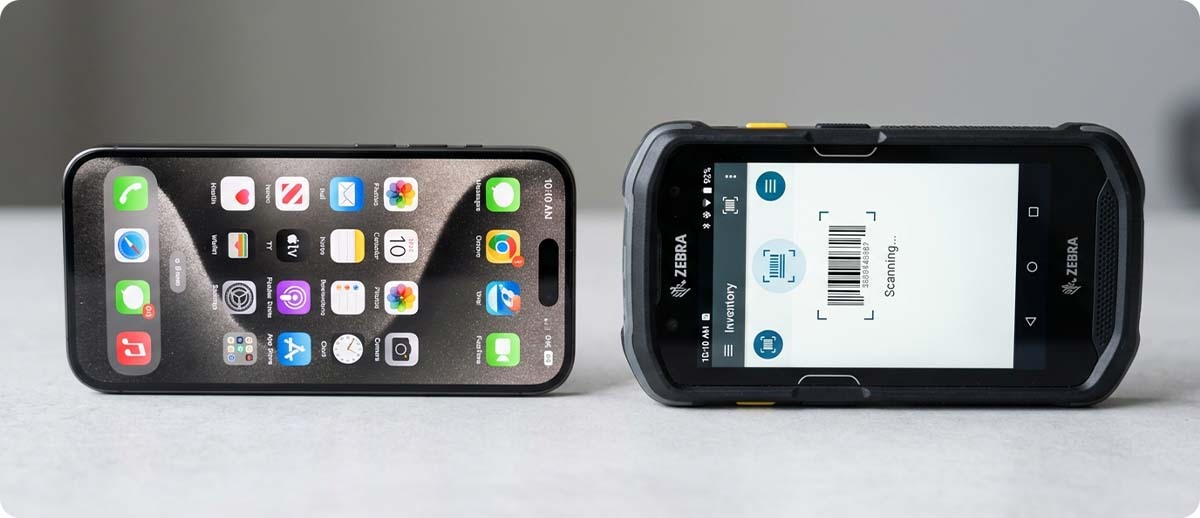
Consumer smartphones and tablets are built for a person carrying them in a pocket or bag, setting them on a desk, and occasionally dropping them at about waist height onto a hard floor once a year or so. That's roughly the use case they're designed and tested for.
A warehouse, distribution center, or production floor is a different test. Devices get dropped from forklift height. They get set down on concrete and kicked. They go from a freezer into ambient air repeatedly and condensation builds up inside the housing. They're handled by workers wearing gloves. They sit in charging cradles that get jostled constantly. None of this is unusual behavior in an industrial environment and none of it is what a consumer device was designed to survive.
VDC Research found that consumer devices fail up to four times more often than enterprise-grade devices in these environments. Which means if your rugged device fails once in a two-year period, a comparable consumer device might fail four times in that same window. Four repair cycles, four periods of downtime, four rounds of IT reconfiguration, all compounding on top of an initial purchase price that looked like a bargain.

The Lifespan Gap Is Where the Math Gets Interesting
Consumer devices in industrial environments typically last one to two years before they need replacement. Rugged enterprise devices are designed and built to last five to seven years in the same conditions, and many do.
Run that out over five years. A $400 consumer device that needs replacing every 18 months costs you two and a half purchase cycles in five years, so around $1,000 per device in hardware alone before you touch repair costs, IT time, or downtime. A $1,200 rugged device that lasts five years costs $1,200 in hardware. At that point you're already roughly even on pure purchase price, and the rugged device has failed significantly less often along the way, which means the actual TCO gap is considerably wider than the sticker price difference made it look.
Honeywell has published research showing that organizations running 1,000 devices spend approximately $170,000 more per year supporting consumer devices than enterprise-grade devices. That's not a typo, it's an annual difference, not a five-year total, and it comes primarily from the IT support, repair cycles, and downtime costs that accumulate around devices that weren't built for the environment they're being used in.
What Makes Rugged Devices Actually Cheaper Over Time
They're built to fail less. A Zebra TC53 or TC78 is drop-tested to 6 to 10 feet on concrete depending on configuration. A consumer smartphone is not. That's not a marketing claim, it's a physical specification that gets tested and certified before the product ships. Fewer drops that turn into failures means fewer repair cycles, fewer replacement purchases, and less downtime per device per year.
When they do need repair, it's faster. VDC Research data cited by MobileDemand found that resolving a consumer device failure takes an average of more than an hour compared to about 37 minutes for a rugged enterprise device. Enterprise devices have better parts availability, better service documentation, and dedicated repair programs like Zebra OneCare with guaranteed turnaround times. The repair itself costs less time to execute even when the failure still happens.
They're easier to manage at scale. A fleet of Zebra devices running Mobility DNA can be staged, configured, updated, and monitored centrally. A fleet of consumer smartphones cannot. The IT overhead of managing enterprise devices is lower per device than managing consumer devices in an enterprise environment, even though enterprise devices cost more upfront. That management efficiency compounds over a five-year lifecycle.
Batteries are hot-swappable. A consumer device that runs low on battery during a shift requires a charging stop or a backup device. A Zebra TC or MC series device with a hot-swap battery gets a fresh battery in under a minute without powering down or losing the WMS session. That's not a minor feature in a two-shift operation. It's the difference between workers finishing shifts on time and workers waiting around for devices to charge.
A Simple Way to Run the Numbers for Your Operation
If you want to put rough numbers on this for your own situation, here's the version that doesn't require a spreadsheet. Take the number of devices in your fleet, estimate how many times a year each device goes down for any reason (repair, replacement, battery failure, anything), and multiply by your worker's hourly rate times the average downtime per incident. Add your repair costs and any replacement purchases. Do the same calculation for a rugged device fleet with a failure rate four times lower and a lifespan three times longer.
Most operations find the rugged option breaks even somewhere between 12 and 24 months, depending on how hard the devices are being used and how often they're currently failing. After that point, the rugged devices are generating savings every month they keep running without incident.
The operations that make the switch and then look back at their repair and downtime data are generally the ones who say they wished they'd done it sooner. The operations that don't tend to keep treating device failures as individual incidents rather than a pattern with a cost attached to it.
A Few Questions We Hear on This Topic
We put rugged cases on our consumer devices. Does that help?
It helps with drops somewhat, but a case doesn't address the underlying issues: no IP sealing against dust and moisture, no hot-swap battery, no enterprise MDM integration, no extended OS support lifecycle, and a scan camera rather than a dedicated scan engine. Cases protect the housing. They don't change what the device is designed to do or how long it's designed to do it.
Our devices don't get dropped that often. Is this still relevant?
Drop damage is one failure mode, not the only one. Consumer devices in industrial environments also fail from moisture exposure, temperature cycling, battery degradation, touchscreen wear from gloved use, and software obsolescence when the manufacturer stops pushing OS updates after two to three years. If your devices are currently running without issues and lasting more than three years, you may genuinely not have this problem. If they're being replaced more frequently than that, the TCO math is probably working against you even if nothing has obviously broken.
Which rugged devices does MBS recommend for a warehouse operation?
It depends on the workflow, the scan range required, and whether workers need cellular connectivity outside the building. The Zebra TC53 covers the majority of standard warehouse workflows at a lower price point than the TC73 or TC78. The TC73 steps up for heavier use cases and higher drop ratings. The MC9400 with extended-range scan engine is the option for high-rack environments where workers scan from the floor rather than walking up to the item. Our team can walk you through the right configuration for your specific situation before you commit to a purchase.
If you want to run through the numbers for your specific fleet, whether that's figuring out where your current device costs are actually coming from or evaluating a switch to rugged hardware, fill out the form below and let's work through it together before you make a decision either way.