
Zebra TC501: What Is New, Who It Is Built For, and Whether It Is Right for Your Operation
Posted by Midwest Barcoding Solutions on Jun 10th 2026

By Midwest Barcoding Solutions | Mobile Computers | Zebra TC501 Guide
The TC5 Series has been one of the most widely deployed enterprise handheld platforms in North America for years. The TC53 and TC58 have been workhorses in warehouses, retail back offices, and field service operations. The TC501 is not a replacement for those devices in the sense that a TC53 fleet needs to be swapped out tomorrow. It is the platform you specify for your next deployment, and it sets the bar for what an enterprise handheld can do in 2026 and beyond.
What makes the TC501 different from the TC53 and TC58 it follows is not a single feature. It is the combination of a genuinely new processor architecture, built-in RFID as standard on every unit, a display that is finally bright enough to use outdoors without squinting, and connectivity standards that will not be obsolete before the device reaches the end of its five-year product availability window.
What Is New in the Zebra TC501
What processor does the TC501 use and why does it matter?
The TC501 runs on the Qualcomm Dragonwing Q-6690, the same processor platform found in the TC701. It includes a dedicated on-device AI engine that handles machine learning and computer vision tasks without sending data to the cloud. Zebra rates it at up to 300 percent more processing performance than legacy TC5 Series devices.
For most standard warehouse and distribution workflows, like scan-to-screen WMS picking, receiving, and inventory lookups, the processor difference between a TC53 and a TC501 is not something workers will notice in daily use. The WMS apps they run today do not require that kind of processing power. Where the Dragonwing processor matters is in the applications that are starting to appear and will become mainstream over the next few years: AI-powered shelf checking, label verification by camera, visual proof of delivery, and voice-guided workflows that process speech on the device rather than requiring a cloud connection. These are the applications that the TC53's processor cannot run well, and the TC501's can.
The TC501 also ships with up to 12 GB of RAM and up to 256 GB of flash storage. That is three times the RAM and eight times the flash compared to legacy TC5 models. For IT teams managing device fleets, that headroom means the device will run current applications without the memory pressure that causes older devices to slow down over time.
Does the TC501 have built-in RFID?
Yes, and this is one of the most significant spec changes from the TC53. Built-in UHF RFID is standard on every TC501 configuration. You do not need to purchase a separate RFID sled or holder to use RFID. The integrated reader captures over 200 tags per second at short range, which covers the most common enterprise RFID use cases including inventory cycle counting, receiving verification, and asset tracking.
This matters for operations that have been evaluating RFID but have not deployed it yet because of the added cost and complexity of sleds. With the TC501, RFID capability is just there. You can deploy it for barcode scanning on day one and activate RFID workflows later as your operation is ready, without any additional hardware purchase. The device you buy today supports both workflows.
How bright is the TC501 display?
The TC501 has a 6-inch AMOLED display with 1500 nits of peak brightness, protected by Corning Gorilla Glass Victus. The TC53 has a 500 nit display. The jump from 500 to 1500 nits is not marginal. It is the difference between a screen that washes out in direct sunlight and a screen that is genuinely readable outdoors in full sun. For workers who operate in outdoor receiving docks, yard management, construction sites, field service, or direct store delivery, this is a meaningful quality of life improvement that also affects productivity. Workers stop tilting the device to find a readable angle. The screen is simply readable wherever they hold it.
AMOLED also delivers better contrast and deeper blacks than the LCD used in previous TC5 devices, which helps with readability in low-light environments like early morning warehouse shifts and dimly lit trailer interiors.
What are the TC501's connectivity and scanning options?
The TC501 supports Wi-Fi 7 and 5G Release 17 for cellular-connected configurations. Wi-Fi 7 is the current generation wireless standard offering significantly faster throughput and better performance in high-device-density environments compared to Wi-Fi 6E. For most warehouse deployments with established Wi-Fi infrastructure, the practical difference will become apparent primarily in high-density scan environments where many devices are competing for bandwidth simultaneously. For operations deploying new Wi-Fi infrastructure, specifying Wi-Fi 7 compatible access points alongside TC501s future-proofs the deployment.
Three scan engine options are available. The SR500 is a standard range 1D/2D imager for typical warehouse distances. The SR560 adds a Time of Flight sensor that improves decode performance and adds depth sensing for AI vision applications. The AC670 is the advanced range engine that reads barcodes from in-hand contact all the way out to 30 meters, about 100 feet, covering everything from close-range item picking to overhead racking and yard scanning without walking up to the item. The AC670 is the same scan engine available in the TC701 and the confirmed top performer for extended-range warehouse scanning.
How rugged is the TC501 compared to the TC53?
The TC501 is the most rugged TC5 Series device Zebra has built. Without the boot it survives 8-foot drops to concrete, two feet higher than the TC53's 6-foot specification. With the rugged boot, drop resistance increases to 9 feet. Zebra also rates the TC501 for two to four times more tumble cycles than other TC5 devices, and added new thermal shock testing that validates operation through rapid temperature transitions. That thermal shock spec is particularly relevant for workers who move between climate-controlled distribution centers and outdoor loading docks in cold climates, or between freezer zones and ambient warehouse areas.
The display is protected by Gorilla Glass Victus, which is the current hardest generation of Gorilla Glass and represents a meaningful upgrade from the glass used in earlier TC5 models. Combined with IP65 and IP68 sealing for dust and water resistance, the TC501 is designed to handle the physical demands of a high-activity frontline environment without the regular screen replacements and housing damage that older devices accumulate.

Who Should Specify the TC501
Is the TC501 the right device for standard warehouse picking and receiving?
Yes, but with a caveat. If your operation runs standard WMS picking, receiving, and shipping workflows with no near-term plans for RFID, AI applications, or outdoor use, the TC501 is more device than you need today. The TC53 and TC58 cover those workflows well and cost less. If you are comfortable specifying hardware based on where your operation will be in three years rather than today, the TC501 is the correct specification. You will not need to replace it when your operation adds RFID, requires a camera-based receiving workflow, or moves workers to outdoor environments. The device already supports all of those.
For new deployments on a five to seven year horizon, the TC501 is the better long-term investment even if the day-one workflows do not use everything it offers.
Which operations benefit most from the TC501 on day one?
Operations with outdoor or bright-light scanning challenges benefit immediately from the 1500-nit AMOLED display. Direct store delivery drivers, yard management teams, field service technicians, and construction site operations no longer need to work around a display that washes out in sunlight.
Operations with high-rack or extended-range scanning needs benefit immediately from the AC670 option. Reading a barcode at 30 meters from a standing position in the aisle eliminates the need to climb racks or use a lift for routine scan events.
Operations evaluating RFID get it standard without buying sleds. Any operation where an RFID pilot is on the roadmap should be specifying TC501s now rather than buying TC53s and then purchasing RFID accessories separately later.
Temperature-variable environments like cold chain operations that move workers between freeze zones and ambient areas benefit from the new thermal shock testing, which reduces the condensation and temperature-related device failures that occur when devices cycle through large temperature differentials repeatedly throughout a shift.
TC501 vs. TC53: The Key Differences at a Glance
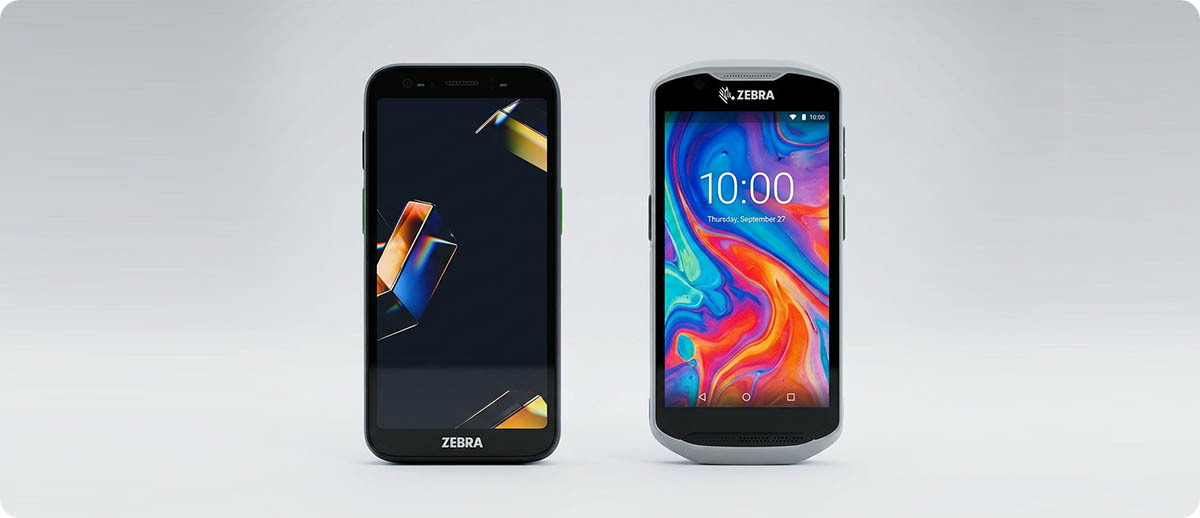
| Feature | TC53 | TC501 |
|---|---|---|
| Processor | Qualcomm 6490 | Qualcomm Dragonwing Q-6690 with AI engine |
| RAM / Storage | Up to 4 GB / 64 GB | Up to 12 GB / 256 GB |
| Display | LCD, 500 nits | AMOLED, 1500 nits, Gorilla Glass Victus |
| RFID | Optional sled accessory | Built-in UHF RFID standard |
| Camera | 13 MP rear | 50 MP rear, optional 13 MP ultrawide |
| Connectivity | Wi-Fi 6E, Bluetooth 5.2 | Wi-Fi 7, 5G Release 17, Bluetooth 6.0 |
| Drop rating (with boot) | 6 ft | 9 ft |
| Scan range options | Standard range | Standard, SR560 ToF, AC670 up to 30m |
Frequently Asked Questions
Is the TC501 compatible with TC53 accessories and cradles?
Not directly. The TC501 is a new form factor with different dimensions and a new charging interface. TC53 cradles, charging cups, and accessories are not forward-compatible with the TC501. This is worth factoring into a migration budget for operations replacing an existing TC53 fleet. New TC501 cradles, multi-slot chargers, and accessories need to be specified alongside the devices. Contact MBS to confirm accessory compatibility and build an accurate total cost for a TC501 deployment.
Should we wait to replace our TC53 fleet with TC501s or upgrade now?
If your TC53 fleet is performing well and is less than three years old, there is no urgency. TC53s are still in active production and support. If your fleet is approaching four to five years of age and you are starting to see battery degradation and repair frequency increase, the replacement timing aligns well with the TC501 launch. Specifying TC501s for your next refresh cycle captures the full five to seven year product availability window Zebra commits to on new platforms, which means the devices you buy now will be supported well into the early 2030s.
Can the TC501 run the same apps our TC53s run today?
Yes. The TC501 runs Android and is fully compatible with Zebra's Mobility DNA tools including DataWedge, StageNow, and LifeGuard for Android. Enterprise WMS applications that run on the TC53 run on the TC501. The larger RAM and faster processor mean those applications run more quickly, particularly in high-data environments. Staging and deploying TC501s alongside existing TC53s in a mixed fleet is straightforward using the same StageNow profiles already in use for the TC53.
What scan engine should we specify for our warehouse?
For standard warehouse picking, receiving, and shipping at typical arm's-length to mid-range distances, the SR500 standard range is the right specification and the most cost-effective. For operations with high racking where workers scan from the floor rather than walking up to the item, or for yard management and outdoor scanning, the AC670 advanced range engine reads up to 100 feet and eliminates the need to physically approach items for scan events. The SR560 with Time of Flight sensor is the option for operations that plan to use AI vision applications alongside standard scanning, as the depth sensor enables a class of computer vision workflows the SR500 and AC670 do not support.
The TC501 is available now and our team can help you evaluate the right configuration for your environment, whether you are refreshing an existing fleet or specifying devices for a new deployment. Fill out the form below and let us help you figure out the right scan engine, connectivity option, and accessory package before you order.