
Lumber, Steel, and Heavy Materials: Why Your Barcode Labels Keep Failing and Your Scanners Struggle in the Yard
Posted by Midwest Barcoding Solutions on Jul 28th 2026
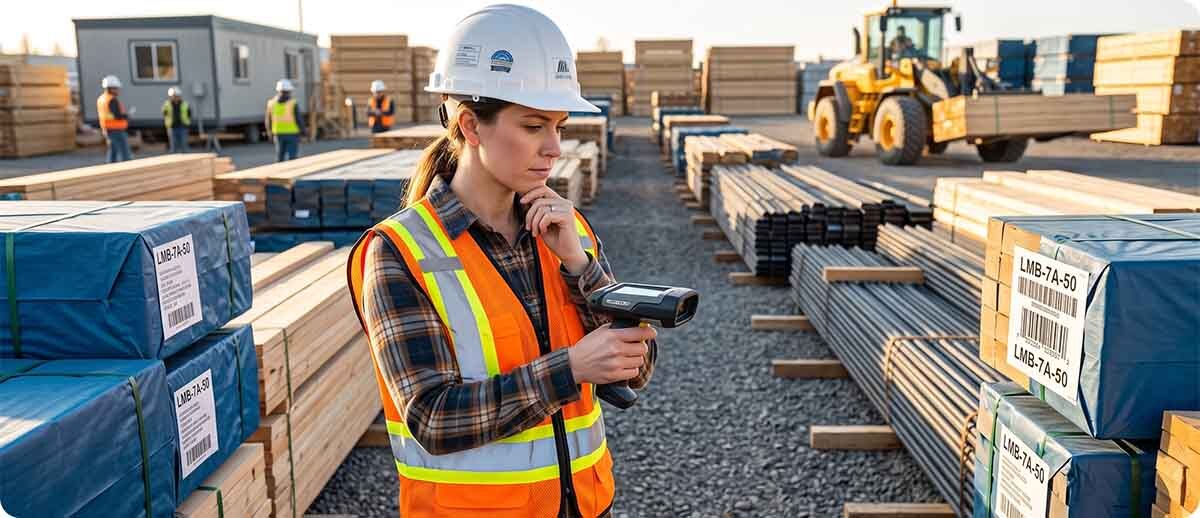
By Midwest Barcoding Solutions | Heavy Industry & Materials | Outdoor Barcoding Guide
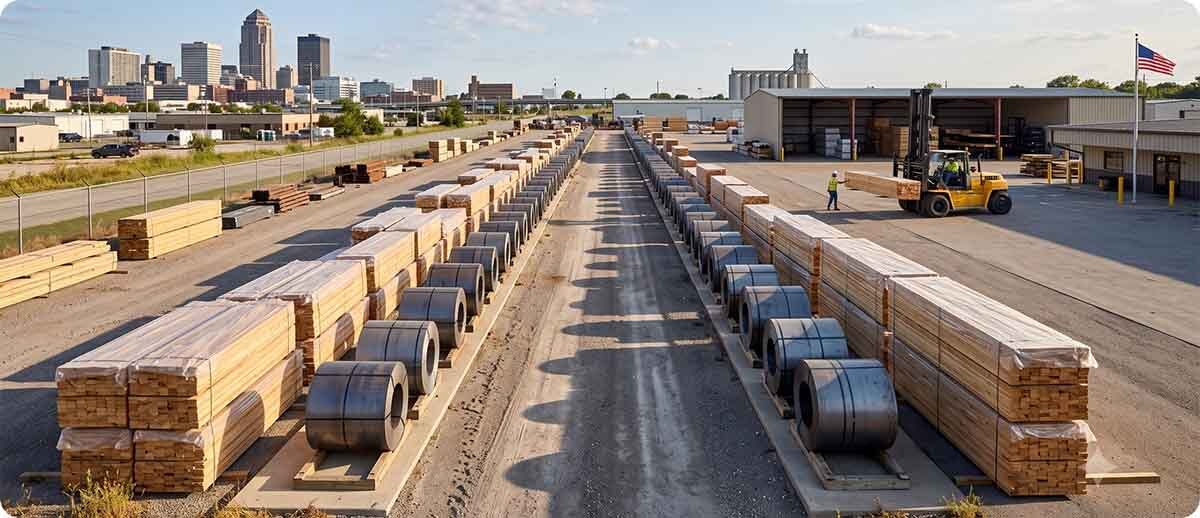
The principles are the same. You want to identify materials accurately, track inventory movements, and have a reliable scan record every time something moves. The challenge is the environment that sits between you and that outcome. Outdoor yards, covered but unheated storage, raw steel and lumber surfaces, variable light from direct sun to deep shade, temperature swings from below zero to well over a hundred degrees, and the physical abuse that comes with forklift handling and rough outdoor conditions. None of that is what standard barcoding gear was designed for.
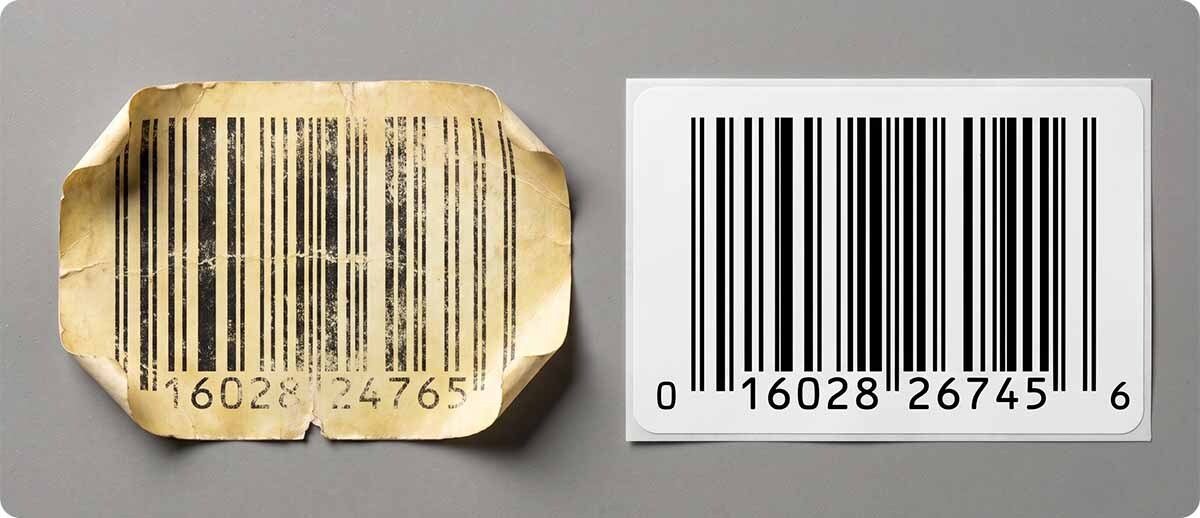
The Label Problem Comes First
Why do standard barcode labels fail so quickly in outdoor heavy materials environments?
Standard paper barcode labels are built for indoor environments. The facestock softens and loses tensile strength in moisture. The adhesive breaks down in UV exposure. Direct sunlight fades the barcode print within weeks. In an outdoor lumber yard or steel service center where bundles or coils sit outside for weeks or months at a time, a paper label applied at receiving is often completely gone or unreadable long before the material moves again.
The surface matters too. Standard labels are designed for smooth cardboard boxes and clean plastic containers. Rough-sawn lumber, galvanized steel, painted beam flanges, and coiled wire rope are all low-energy or irregular surfaces where standard adhesives fail to bond properly and labels peel within days of application. Getting a label to stay on raw steel requires an aggressive adhesive formulated specifically for that surface type.
What label materials actually work in these environments?
Polyester and polypropylene labels are the baseline for any outdoor heavy materials application. Polyester facestock is dimensionally stable under temperature swings, UV resistant, tear resistant, and available with adhesive formulations that bond to low-energy coated metal surfaces. Polypropylene is waterproof, UV stable, and flexible enough to apply to curved or irregular surfaces like pipes and coiled material without the facestock cracking.
For materials that will be stored outdoors for extended periods, months rather than weeks, overlaminated polyester or anodized aluminum tags are worth considering. The overlaminate adds a protective layer over the printed barcode that significantly extends readable life in direct UV and abrasion exposure. For applications where the tag needs to survive the entire lifecycle of the material through processing, shipping, and end-use, metal tags are the long-life solution.
One thing that trips people up: if you're running polyester or polypropylene labels through a thermal transfer printer, you need resin ribbon to match. Wax ribbon won't bond reliably to synthetic label surfaces and will smear in outdoor conditions. The outdoor label investment is only as durable as the ribbon used to print it.
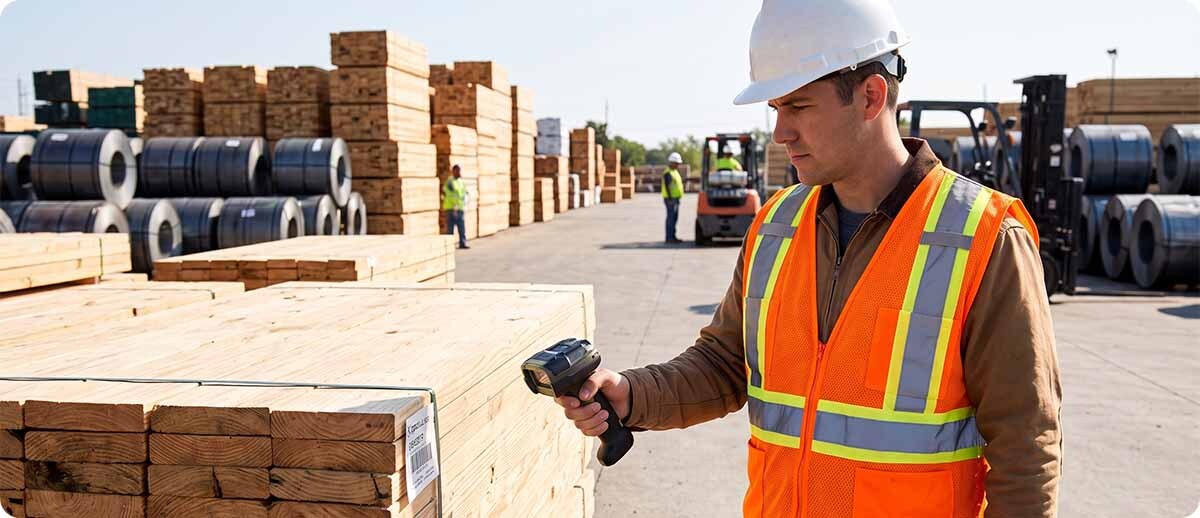
The Scanner Problem Is Different
Why do standard warehouse scanners struggle in outdoor yard environments?
Three reasons, and they compound each other. First, most warehouse scanners are IP54 or IP65 rated at best, which handles splashing and light water exposure but not rain in an open yard or the pressure washing that happens in some material handling environments. Second, standard handheld scanners are tested for room-temperature drops to concrete, not for the temperature cycling between a cold morning in January and a July afternoon in a steel yard where the ambient temperature near dark surfaces can easily exceed 120 degrees Fahrenheit. Third, outdoor ambient light is a genuine read challenge for any scanner, and some configurations that perform well in a warehouse dim out completely in direct sun.
The DS3678 series is the right scanner for this environment. It's IP65 and IP67 rated, rated for operation from -22 degrees Fahrenheit to 122 degrees Fahrenheit, and survives 8-foot drops to concrete with 5,000 tumble cycles. The HP configuration specifically addresses outdoor ambient light challenges with improved decode performance in high ambient light conditions. Bluetooth range of up to 300 feet covers the distances typical in yard operations without the worker needing to be near a base station for every scan.
What about reading codes stamped directly into steel rather than on a label?
Steel service centers, metal fabricators, and heavy industrial operations often track material through codes that are stamped, laser-etched, or dot-peened directly into the metal surface rather than on a label. These are Direct Part Marks, and they're low-contrast marks on a reflective metal background that standard barcode scanners can't decode reliably.
The DS3678-DP is configured specifically for DPM reading. It uses specialized illumination geometry and decoding algorithms to distinguish and read marks etched or stamped into metal, plastic, and other challenging surfaces. If material tracking through the processing or fabrication stages relies on codes that live in the surface of the material rather than on a label, the DP configuration is the right tool for that workflow.
Mobile Computing in the Yard
Do mobile computers work differently in outdoor yard environments?
Two specific issues come up constantly in outdoor yard computing that don't exist in indoor warehouses. The first is connectivity. Wi-Fi coverage ends at the building walls. Workers managing yard inventory, cycle counting material in outdoor storage, or processing incoming loads at a remote receiving gate don't have reliable Wi-Fi. A standard Wi-Fi-only mobile computer loses connection the moment the worker leaves the covered area, which means the WMS session drops and whatever was being processed is lost or delayed.
The TC78 with 5G cellular connectivity solves this specifically. Workers stay connected via the carrier network anywhere in the yard regardless of Wi-Fi coverage. WMS sessions stay live. Data syncs in real time. The same device that works in the DC also works in the yard without any workflow change for the worker.
The second issue is display readability. A standard mobile computer display at 500 nits is unreadable in direct afternoon sun in a steel yard. The TC78 and TC501 both feature displays in the 1500-nit range that are genuinely readable in direct sunlight without the worker needing to shade the screen or tilt the device to find a readable angle. In an outdoor yard where workers are moving quickly and can't stop to find shade for every transaction, that display brightness is a real operational difference.
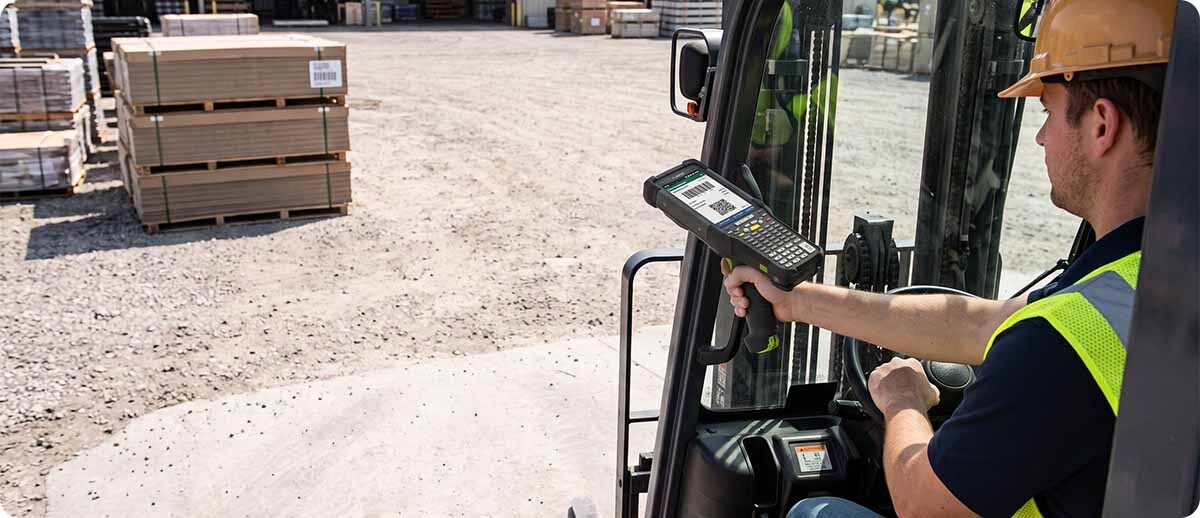
What about scanning from a forklift at extended distances in the yard?
Large outdoor yards often have bundles, coils, or stacks stored at heights or distances that make handheld scanning impractical without physically dismounting. The MC9400 with SE58 scan engine reads barcodes from in-hand contact out to over 100 feet, which covers most yard scanning scenarios from a forklift cab without the operator needing to get off the machine. In a large steel yard or lumber operation where scanning from the cab versus walking up to each stack is the difference between a 6-hour cycle count and a 2-hour cycle count, that range difference is a measurable operational gain.
Hardware Built for Heavy Materials at MBS
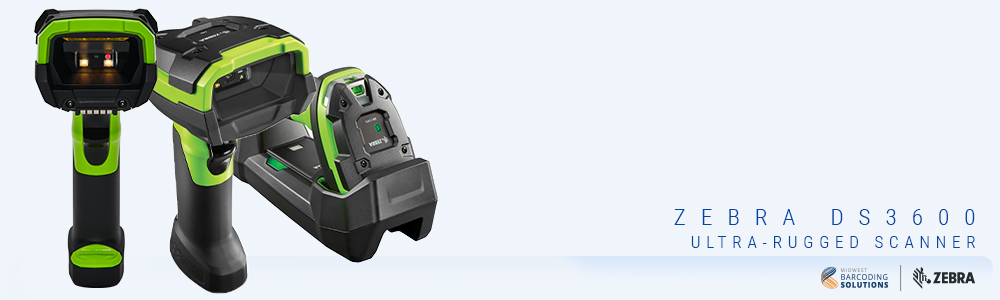
Zebra DS3600 Ultra-Rugged Cordless Scanner Series
IP65/IP67 | 8ft drop | 5,000 tumbles | -22°F to 122°F | BT up to 300ft
DS3678-SR: Standard range 1D/2D for labeled material in covered or outdoor storage
DS3678-DP: Direct Part Mark for codes stamped or etched into metal and steel surfaces
DS3678-HP: High performance with improved decode in high ambient outdoor light
DS3678-ER: Extended range for scanning at distance in large outdoor yards
DS3678-XR: Extra long range for very large yard or dock door scanning applications
Shop DS3678 Series →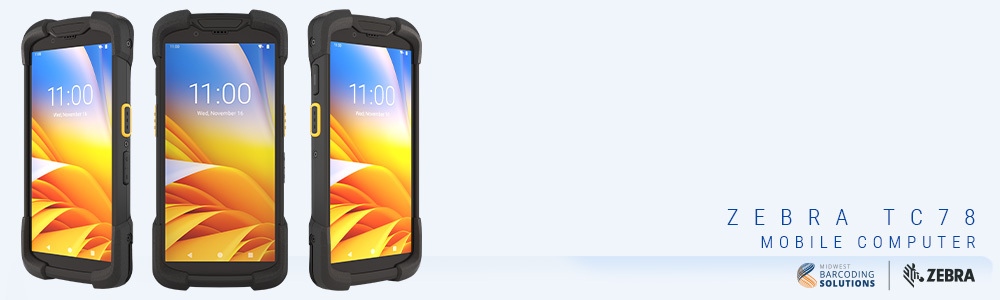
Zebra TC78 Mobile Computer
Wi-Fi 6E + 5G cellular | 10ft drop | IP65/IP68 | 1500-nit display | SE55 up to 40ft
The outdoor mobile computer choice when connectivity beyond the building walls matters. Stays connected via 5G throughout the yard without dropping WMS sessions. 1500-nit display is genuinely readable in direct sunlight.
Shop Zebra TC78 →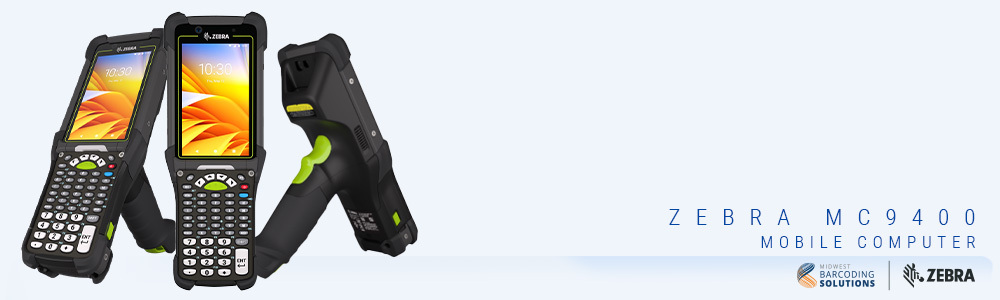
Zebra MC9400 Mobile Computer
SE58 scan engine to 100ft+ | Pistol grip | 8ft drop | IP65/IP68 | Wi-Fi 6E
The right choice when forklift operators need to scan from the cab rather than dismounting. SE58 reads from contact to over 100 feet, covering large yard stacks and elevated storage from a standing or seated position.
Shop Zebra MC9400 →Quick Questions
Our labels are currently lasting about a month in the yard. Is that normal?
For a standard paper label in direct outdoor exposure, unfortunately yes. The UV and moisture degradation timeline on paper is short. Moving to a polyester label with a UV-stable adhesive and an overlaminate should extend that to six months to a year or more depending on your specific environment. For material that sits longer than that before moving, metal tags or anodized aluminum options are worth evaluating. Contact us and we can help you match the label material to your actual storage duration and surface type.
We process material through different stages and the label needs to survive the whole journey. Is that realistic with a printed label?
It depends on what the material goes through. For material that stays in a yard environment, a robust outdoor polyester label holds up well through the typical processing and handling stages. For material that goes through heat treating, galvanizing, or other high-temperature processes, a standard label won't survive and a metal tag or DPM code is the better path. Tell us the process stages the material goes through and we can spec the right identification solution for the full lifecycle.
Do we need both a yard mobile computer and an indoor device, or can one device cover both?
One device can cover both, and for most operations that's the right approach. The TC78 works as a standard Wi-Fi warehouse mobile computer inside the building and automatically switches to 5G cellular when the worker moves outside. Workers carry one device throughout their shift regardless of whether they're in the DC or the yard. The cellular data plan cost is the trade-off, but for operations where workers regularly move between indoor and outdoor environments, carrying one device instead of two is worth it.
If you're currently watching labels fail in the yard or dealing with scanner performance problems outside the building, our team can help you work through the right hardware and label combination for your specific environment. Fill out the form below and let's get the right solution in place before another batch of labels degrades.