
Why Your Warehouse Scanners Keep Failing on the Food Production Floor
Posted by Midwest Barcoding Solutions on Jul 17th 2026
By Midwest Barcoding Solutions | Food & Beverage | Production Floor Hardware Guide
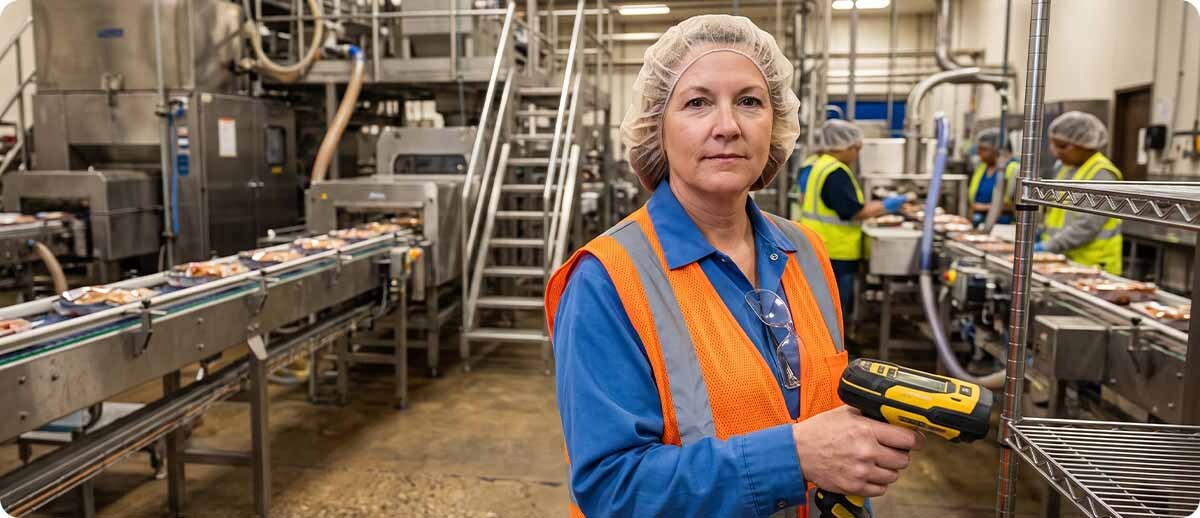
We see this play out in a predictable pattern. A food operation brings their DC hardware onto the production line. Within a few months they're dealing with scanner failures, screen fogging, buttons that stopped working after a cleaning cycle, or mobile computers that can't survive the temperature swings between line areas and cold zones. Nobody did anything wrong. The hardware just wasn't built for where it ended up.
Understanding what the production floor actually demands from barcoding hardware, and why it's different from a warehouse, is the starting point for getting this right.
The Washdown Problem
What is the difference between IP65 and IP67 and why does it matter on a food production floor?
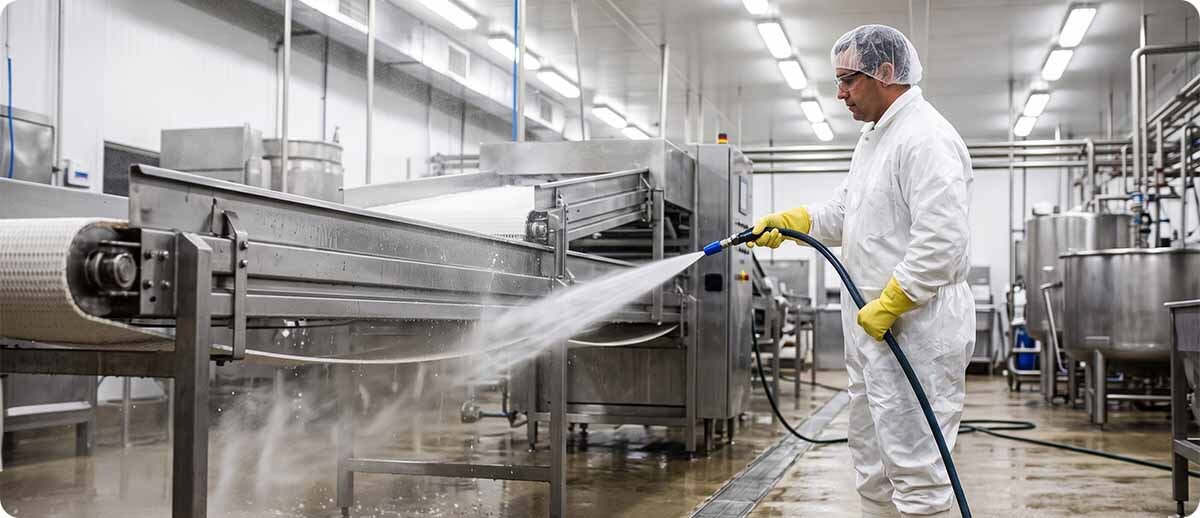
IP65 means the device is protected against water jets from any direction. IP67 means the device can be submerged in up to one meter of water for up to 30 minutes. Most warehouse-grade scanners are IP65. Most food production floor cleaning protocols involve pressure washing and jetting water at equipment, not just splashing or rinsing.
If a scanner is rated IP65 and someone runs a pressure hose near it during a washdown, you're in grey territory at best and the scanner is getting water ingress at worst. IP67 is the correct rating for anything that's going to live on a food production floor where USDA or FDA sanitation protocols require regular high-pressure cleaning. The practical difference between these two ratings is the difference between a scanner that survives two years of washdowns and one that needs replacing after the first six months.
The Zebra DS3678 series is rated IP65 and IP67. It can be sprayed down with jetting water and submerged. It was specifically designed for exactly the kind of industrial cleaning protocol that food and beverage production floors require.
Stainless Steel and Direct Part Marks
Why can't standard warehouse scanners read barcodes on stainless steel equipment?
In a distribution center, almost everything being scanned has a label on it. A box, a pallet, a bin, a carton. The barcode is printed on paper or synthetic label stock and the scanner reads it without any difficulty.
On a food production floor, a meaningful percentage of what needs to be tracked and identified is the equipment itself. Stainless steel tanks, mixing vessels, totes, transport containers, and production equipment components often have their identification codes stamped or laser-etched directly into the metal surface rather than on a label. These are called Direct Part Marks, or DPMs, and they look nothing like a barcode on a white label background. They're low-contrast, the ink is the same color as the surface, and the reflection characteristics of stainless steel make standard imagers struggle with them.
The Zebra DS3678-DP is a DPM-specific configuration that uses specialized illumination and decoding algorithms to read marks on metal, glass, and other challenging materials that standard scanners miss. If equipment tracking is part of your production floor workflow and you're using any scanner that's not specifically DPM-rated, that's where the misreads and manual lookups are coming from.
Temperature Variation and Condensation
Why do scanners and mobile computers fail when workers move between hot and cold zones?
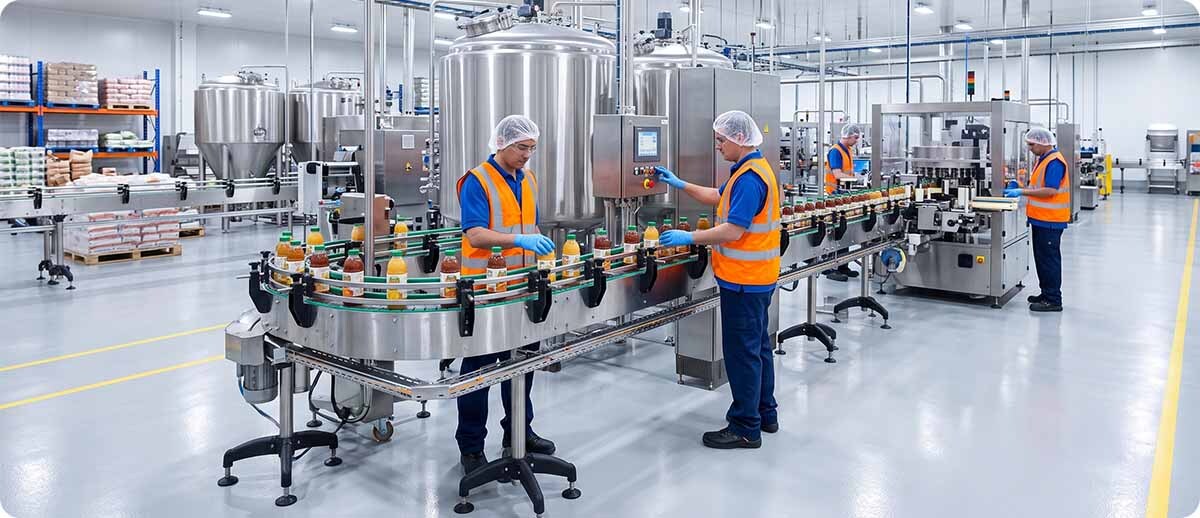
This is one of the less-discussed failure modes in food production and one of the most common. A worker moves from a 40°F cold zone to an ambient production area at 70°F. The device they're carrying is at 40°F. When it hits the warmer air, condensation forms inside the housing the same way a cold glass sweats in a warm room. Standard devices handle occasional temperature shifts reasonably well. Repeated thermal cycling, moving between cold and ambient multiple times per shift for months, is a different story. Moisture accumulates inside the housing over time even if each individual cycle doesn't seem like a problem.
Devices specified for temperature-variable food production environments need both the thermal operating range to function at the extremes and the sealing to prevent condensation ingress during the transitions. The DS3678 is rated for operation from -22°F to 122°F, covering both cold zone operation and warm ambient production areas within the same shift without failure.
FDA Traceability and the Case for Getting This Right
How does FSMA Section 204 affect production floor barcoding requirements?
FDA's Food Safety Modernization Act Section 204 established food traceability requirements for foods on the Food Traceability List, covering high-risk foods including leafy greens, shell eggs, nut butters, fresh produce, and others. The rule requires operations to capture Key Data Elements at Critical Tracking Events, which in plain terms means capturing specific lot and location data at specific points in the production and distribution chain with enough specificity to support a rapid recall or outbreak investigation.
The practical barcoding implication is that lot traceability data needs to be captured reliably at the production line level, not just at the DC. A scanner that fails during washdown or misreads DPM codes on production equipment is not just an equipment inconvenience. It's a gap in the traceability record that matters when an investigator needs to trace an ingredient lot backward through production in a 24-hour window. Getting the right hardware onto the production floor is partly an operational efficiency decision and increasingly a compliance decision.
The Hardware That Actually Belongs on a Food Production Floor
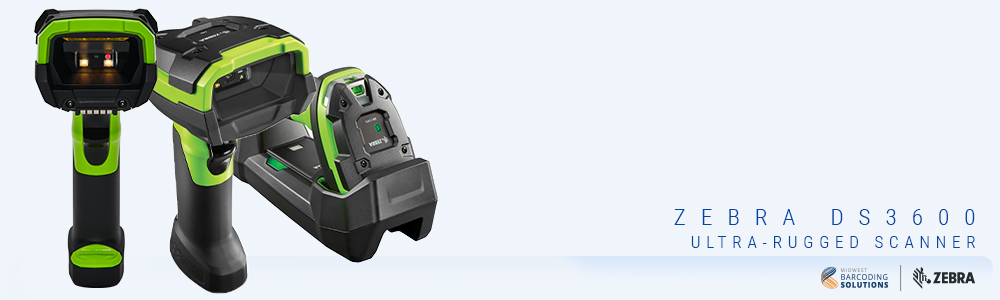
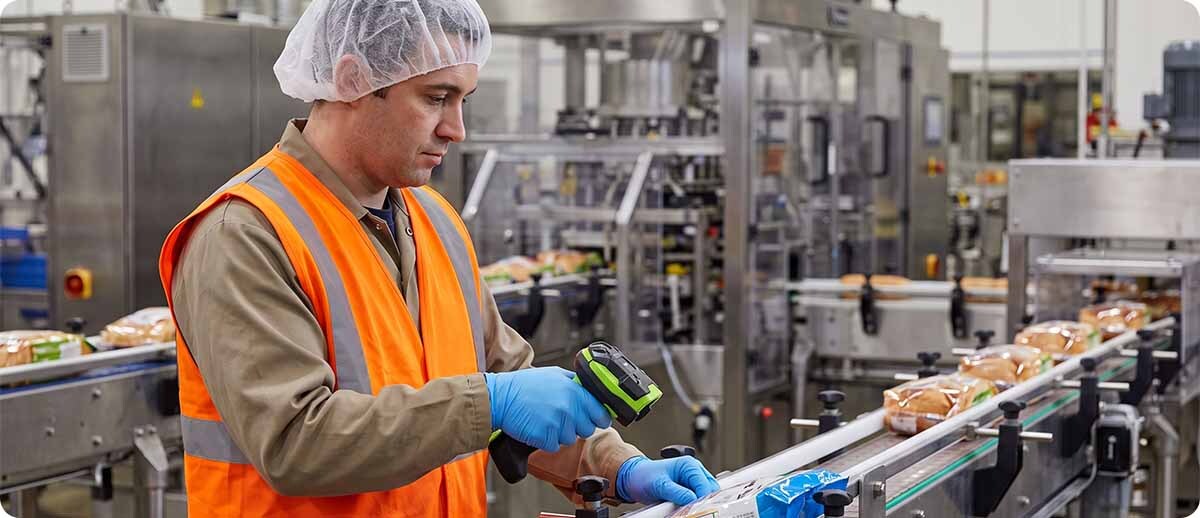
Zebra DS3678 Ultra-Rugged Cordless Scanner
IP65/IP67 | 8ft drop | 5,000 tumbles | -22°F to 122°F | Jetting water safe | BT 4.0 up to 300ft
The DS3678 is the right starting point for most food production floor scanning. It's IP67 rated for washdown environments, reads 1D and 2D barcodes including damaged and low-contrast codes, and survives the temperature range that food operations require. Available in four configurations:
DS3678-SR: Standard range 1D/2D for typical production floor distances
DS3678-DP: Direct Part Mark for stainless steel and low-contrast surface reading
DS3678-HD: High density for small or dense barcodes on product packaging
DS3678-ER: Extended range for reading from distance on larger production lines
Shop Zebra DS3678 →Questions We Hear From Food Operations
Our DC scanners are IP65. Is that really not enough for the production floor?
It depends on your cleaning protocol. IP65 handles water jets from any direction, which covers most light cleaning. If your sanitation team uses high-pressure hoses or the equipment gets submerged during washing, IP65 is not sufficient and you'll see failures within the first year. If the production area gets wiped or lightly rinsed rather than pressure-washed, IP65 may be adequate. The honest test is whether you've had DC hardware fail in that environment. If you have, IP67 is the correct spec.
We don't scan equipment codes, just labels on product. Do we still need DPM capability?
If all your scanning is labels on product and packaging, the standard DS3678-SR covers you without needing the DPM configuration. The DPM version is specifically for operations where codes are etched or stamped into metal or other hard surfaces. If that's not part of your workflow, the SR is the simpler and typically more cost-effective configuration.
We're not sure which FSMA 204 requirements apply to our products. Where do we start?
The FDA's Food Traceability List is publicly available and lists the specific commodity categories subject to the enhanced traceability requirements. If your products appear on that list, the Key Data Element and Critical Tracking Event requirements apply to your operation. For the barcoding and hardware side of compliance, we can help you understand what capture points need to be in place and what hardware is appropriate for each. The regulatory interpretation of the rule itself is a question for your legal or compliance team, but we can make sure the hardware supports whatever your compliance approach requires.
If your production floor is currently running hardware that wasn't designed for it, or if you're specifying hardware for a new line and want to make sure you get it right the first time, our team can help. Fill out the form below and let's talk through your specific environment before you order anything.