
Zebra TC501 vs. TC73: Should You Upgrade Your Ultra-Rugged Fleet or Stay the Course?
Posted by Midwest Barcoding Solutions on Sep 9th 2026

By Midwest Barcoding Solutions | Mobile Computers | TC501 vs. TC73 Upgrade Guide
We sell both and we don't have a reason to push you toward the newer, more expensive device if the one you have covers the job. This guide is specifically for operations running TC73 fleets who want a straight answer on whether the TC501 justifies a fleet transition or whether it makes more sense to stay with the TC73 for the remainder of the device lifecycle.
What the TC73 Still Does Very Well
The TC73 is not a device that needs to be replaced urgently. It has a 10-foot drop rating, 2,000 tumbles from 3.3 feet, and dual IP65/IP68 sealing. It runs Wi-Fi 6E with the SE4770 or SE55 scan engines covering standard to extended range up to 40 feet. It's nearly 20 percent thinner and lighter than the previous TC7 generation, which matters for all-day wearability in demanding environments.
For operations running standard warehouse workflows, picking, receiving, inventory lookups, and scan-to-screen WMS interactions, the TC73 covers all of it reliably. If your TC73 fleet is healthy, your workflows haven't changed, and you're not planning to add RFID or AI-powered applications in the near term, there is no operational reason to replace working TC73 devices with TC501s before the end of the TC73's natural lifecycle.
What the TC501 Adds That the TC73 Doesn't Have
Built-in UHF RFID without a sled
This is the single biggest capability difference between the two devices. The TC501 ships with integrated UHF RFID on every unit as standard. No sled, no extra cost, no additional hardware to manage. The TC73 has no native RFID capability. Adding RFID to a TC73 operation means a separate sled attachment that adds bulk, cost, battery considerations, and an accessory to manage across the fleet.
For operations currently running TC73s with RFID sleds and dealing with the complexity and cost of that combination, the TC501 is the device that eliminates the sled entirely. One device does both the standard barcode scanning and the RFID reading from the same hardware. For operations that have been evaluating RFID inventory management or asset tracking but haven't pulled the trigger because of the sled complexity, the TC501 removes that barrier.
A dedicated AI processor
The TC501 runs on the Qualcomm Dragonwing Q-6690 with a dedicated neural processing unit. Visual receiving verification, AI-powered barcode quality checking, and on-device machine learning applications run locally without requiring cloud connectivity for the processing. The TC73 doesn't have a dedicated AI engine and can't run these workloads effectively regardless of software updates.
For most current warehouse operations this distinction doesn't change anything today because AI-powered frontline workflows are still early adoption. Where it matters is in a 5-year device lifecycle decision. If your operation plans to evaluate or implement AI-powered receiving, quality control, or worker guidance applications within the life of the next device you buy, the TC501 is the platform those applications run on.
An outdoor-readable display
The TC501 has a 6-inch FHD+ AMOLED display at 1,500 nits with Gorilla Glass Victus. The TC73 has a Full HD LCD at standard brightness. In direct sunlight on a loading dock, in an outdoor yard, or on a delivery route, the TC73's display washes out in conditions where the TC501 remains fully readable. For workers who primarily operate indoors this difference is irrelevant. For workers who regularly operate outdoors or in high-ambient-light environments, it's a meaningful daily difference.
Hot swap battery vs. warm swap
The TC501 supports hot swap battery replacement: the battery can be swapped without shutting down the device or losing the active WMS session. The TC73 uses warm swap, meaning the device needs to restart when the battery is changed. In extended-shift environments where battery swaps happen once or more per shift, the difference between hot and warm swap accumulates into real time per device per day across a fleet over a year.
Wi-Fi 7 and next-generation connectivity
The TC501 supports Wi-Fi 7 (802.11be) where the TC73 supports Wi-Fi 6E. In most current facilities the practical difference is minimal since Wi-Fi 7 infrastructure isn't widely deployed yet. For operations planning a wireless infrastructure upgrade alongside the device fleet and wanting the devices to support the full capability of the new network for their full lifecycle, Wi-Fi 7 on the TC501 is worth factoring in.

Where the TC73 Still Wins
Drop rating. The TC73's 10-foot drop rating exceeds the TC501's 8-foot rating in the standard configuration (9 feet with the rugged boot, SG-TC5AEXO-01). For operations where devices regularly fall from elevated heights like truck beds, elevated dock platforms, or high racking, the TC73's unassisted 10-foot rating is a genuine advantage. The TC501 with rugged boot closes most of that gap but adds bulk and cost.
Accessory ecosystem maturity. The TC73 has a wider range of available accessories, cases, cradles, and third-party integrations than the TC501's newer platform. For large fleet deployments where accessory availability and spare parts sourcing matter, the TC73's established ecosystem is a real operational advantage.
Price. The TC73 costs less per unit than the TC501. For large fleet deployments where the hardware cost multiplies across the fleet, the per-unit difference is a real budget number. If the TC501's additional capabilities aren't operationally required, the TC73 is the more cost-effective industrial handheld.
The Decision Framework
| Your Situation | Right Device |
|---|---|
| TC73 fleet is healthy, standard indoor workflows, no RFID plans | Keep TC73, upgrade at end of lifecycle |
| Currently running TC73 with RFID sleds, want to consolidate | TC501 |
| New deployment, RFID inventory or asset tracking on roadmap | TC501 |
| Workers regularly operate outdoors or in high ambient light | TC501 |
| Extended shifts, hot swap battery is operationally important | TC501 |
| Devices regularly fall from above 9 feet, maximum drop rating needed | TC73 |
| Budget-sensitive new deployment, no RFID or AI plans | TC73 |

Shop TC501 and TC73 at MBS

Zebra TC501
Wi-Fi 7 | Built-in UHF RFID | AI processor | 1,500-nit AMOLED | 8ft drop (9ft with boot) | Hot swap battery
Shop Zebra TC501 →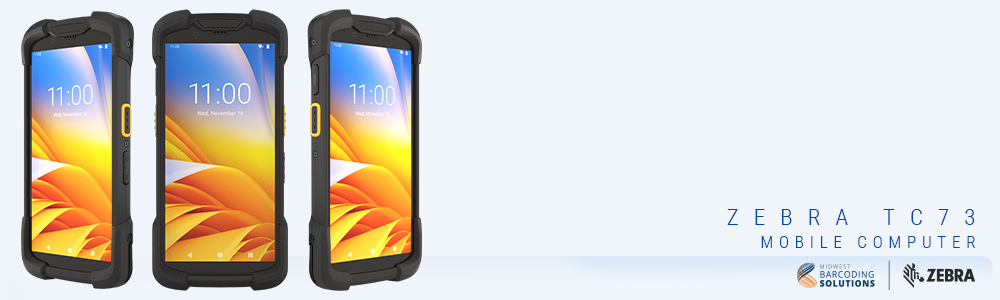
Zebra TC73
Wi-Fi 6E | SE4770 or SE55 up to 40ft | 10ft drop | 2,000 tumbles | IP65/IP68 | Warm swap battery
Shop Zebra TC73 →Questions We Get on This
Our TC73s are two years into a five-year lifecycle. Should we be transitioning to TC501 now?
Probably not unless you have a specific workflow reason to. Two years into a healthy TC73 fleet, replacing devices before the end of their lifecycle means paying for hardware you don't need to replace yet. The more practical approach for most operations is to spec TC501 for new deployments and for roles where RFID or the TC501's other capabilities solve a specific current problem, while keeping the existing TC73 fleet running through its normal lifecycle. A mixed fleet of TC73s and TC501s managed through the same Zebra Mobility DNA platform is a completely reasonable outcome.
Can TC73 and TC501 share cradles and accessories?
No. TC73 cradles, cases, and holsters are specific to the TC73 platform. TC501 accessories are specific to the TC501. The two device families do not share physical accessories. If you're running a mixed fleet, plan for separate charging infrastructure for each device type. The TC501 does share its battery platform with the TC701, which simplifies mixed TC501 and TC701 deployments.
We need RFID but don't want to give up the TC73's drop rating. What's the recommendation?
The TC501 with rugged boot reaches 9 feet, which covers the majority of standard warehouse drop scenarios. If your devices are regularly falling from above 9 feet, that's an environment where the TC73's unassisted 10-foot rating is a real advantage and worth weighing against the RFID benefit. For most operations the 9-foot TC501 with rugged boot covers the physical requirement and the built-in RFID eliminates the sled complexity. If you're not sure whether your drop scenarios routinely exceed 9 feet, track your actual device drop incidents for a month before making the decision. Most operations find their real drop events are in the 4 to 7 foot range despite assuming they need maximum drop protection.
If you want a direct recommendation on whether to transition your TC73 fleet to TC501 or hold the current devices through their lifecycle, fill out the form below. Tell us your approximate fleet size, current TC73 lifecycle stage, and whether RFID is on your near-term roadmap and we'll give you a straight answer.