
FSMA 204 Compliance Date Pushed to 2028: How Midwest Food Processors Should Use the Extra Time
Posted by Midwest Barcoding Solutions on Nov 2nd 2026
Food Traceability · FSMA 204 | By Midwest Barcoding Solutions
Last reviewed November 3, 2026
In This Post
FDA can't enforce the FSMA 204 food traceability rule before July 20, 2028. That sounds like plenty of time, but your buyers may not wait that long, and a traceability system takes longer to build than most plants expect. Here's where the rule stands, whether it applies to your operation, and a phase-by-phase plan for using the next 20 months well.
FSMA 204 Key Facts
- Enforcement date: FDA can't enforce the rule before July 20, 2028. The original compliance date was January 20, 2026.
- Who's covered: anyone who manufactures, processes, packs, or holds foods on FDA's Food Traceability List, including shell eggs, soft cheeses, deli salads, nut butters, and fresh-cut produce.
- What you record: key data elements at each critical tracking event, tied together by a traceability lot code.
- How fast: records go to FDA within 24 hours of a request and are kept for two years.
- What's next: FDA holds a public meeting on November 6, 2026 about possible compliance flexibilities.
When the original January 2026 date slipped, a lot of food plants across the Midwest breathed out and moved FSMA 204 to the bottom of the list. That's understandable. It's also how operations end up rushing a traceability rollout in the spring of 2028, on hardware chosen in a hurry, while a big customer is already asking for lot data they can't produce.
The extra time is real. The plants that use it to pilot, test, and fix problems on a single line will be in a far better spot than the ones that wait for the deadline to get close.
Where Things Stand
Where Does FSMA 204 Stand Right Now?
What Is the FSMA 204 Compliance Date Now?
The rule's original compliance date was January 20, 2026. FDA proposed pushing it back 30 months, to July 20, 2028. Then Congress went a step further: a spending law signed in November 2025 bars FDA from using its funds to enforce the rule before July 20, 2028. Congress has carried that limit forward in later funding bills, and FDA has said it intends to follow it.
In practice, that means no FDA enforcement before July 20, 2028. The rule itself, including what you have to record, hasn't gone away. FDA keeps the current status on its Food Traceability Rule page.
What Changed This Fall?
Two things worth knowing about. In October 2026, FDA released a draft policy saying it would not enforce the rule for restaurants and retail food stores with average annual food sales between $250,000 and $1 million. Businesses under $250,000 were already exempt. That policy is aimed at stores and restaurants, not processors and packers.
FDA also scheduled a public meeting for November 6, 2026 to discuss possible flexibilities, including ranges of lot codes for distributors shipping to retailers, records for single units, returns, and shipments between locations of the same company. None of those ideas is in the rule yet. If something changes, we'll update this post.
Why Shouldn't You Wait Until 2028?
Because your customers may not. At the IFPA produce show in October 2026, traceability providers reported that retail and foodservice buyers are already asking suppliers for traceability data, and that suppliers who can't provide it risk rejected shipments and lost business. A buyer's requirement doesn't wait for FDA enforcement.
There's also the build time. Mapping your products and tracking events, picking hardware, connecting it to your ERP or inventory system, and training every shift takes most plants many months. Doing it in 2027 lets you find the problems while they're cheap to fix.
The 2028 date is when FDA can start enforcing. It's not when your customers will start asking.
Does It Apply
Does FSMA 204 Apply to Your Operation?
Which Midwest Foods Are on the Food Traceability List?
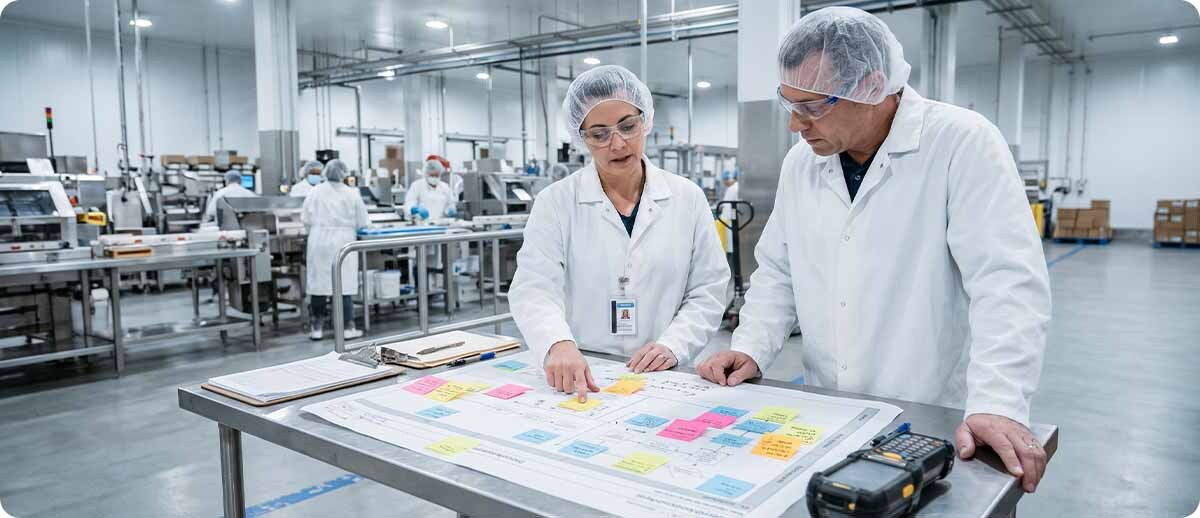
FSMA 204 covers foods on FDA's Food Traceability List, and anyone who manufactures, processes, packs, or holds them. A lot of the list lines up with what Midwest plants make and move, which is why FSMA 204 matters so much for egg packers, cheese makers, deli salad producers, and fresh-cut processors here:
Eggs
Shell Eggs
Packers, graders, and distributors handling shell eggs are covered. With Iowa leading the country in egg production, this hits a lot of Midwest operations.
Dairy
Soft and Semi-Soft Cheeses
Fresh soft, soft-ripened, and semi-soft cheeses are on the list. Hard cheeses are not. FDA exempted Grade "A" cottage cheese on the Interstate Milk Shippers List in 2026.
Prepared foods
Deli Salads and Nut Butters
Ready-to-eat deli salads (think egg, potato, or pasta salad sold refrigerated) and nut butters are both on the list.
Produce
Fresh-Cut and Fresh Produce
Leafy greens, fresh-cut fruits and vegetables, cucumbers, peppers, tomatoes, melons, fresh herbs, and sprouts. Includes the processors cutting and packing them.
The full list also includes finfish, crustaceans, and mollusks. Check FDA's Food Traceability List for the exact definitions before you decide a product is in or out, because the details (fresh vs. frozen, pasteurized vs. not) matter.
What Records Does FSMA 204 Actually Require?
The rule boils down to three ideas. Critical tracking events (CTEs) are the moments food changes hands or changes form: harvesting, cooling, initial packing, receiving, shipping, and transformation (like cutting, mixing, or repacking). At each one, you record key data elements (KDEs): what the product is, how much, where it came from, where it went, and when. Tying it all together is the traceability lot code (TLC), a lot code you assign at packing or transformation that follows the product down the chain.
You'll also need a written traceability plan, records kept for two years, and the ability to hand FDA your records within 24 hours of a request. In some situations, such as an outbreak investigation, that means an electronic, sortable spreadsheet. Here's how the main events look on a plant floor:
| Tracking Event | What Happens | What You Record | How Barcoding Helps |
|---|---|---|---|
| Receiving | Product arrives at your dock | TLC from your supplier, product, quantity, supplier location, date | Scan the inbound case label instead of typing lot codes off a packing slip |
| Transformation | You cut, mix, cook, or repack a listed food | Input TLCs used, the new TLC you assign, product, quantity, date | Scan inputs at the line and print the new lot label on the spot |
| Initial packing | Raw product gets packed for the first time | The TLC you assign, where it was grown or harvested, quantity, date | Print a durable case label carrying the TLC in a barcode |
| Shipping | Product leaves your building | TLC, product, quantity, where it's going, date | Scan each pallet or case onto the load so the record builds itself |
On a phone, swipe the table sideways to see every column.
If someone on your dock is copying lot codes by hand today, that's the first place a barcode scan pays for itself.
The Plan
A Phase-by-Phase Plan for the Extra Time
Here's a realistic way to spread the work out so nothing lands on the last few months.
Phase 1 · Now to spring 2027
What Should You Do in the Next Six Months?
- List every product on the Food Traceability List that you make, pack, or hold, and every tracking event that touches it.
- Ask your largest buyers what traceability data they want from you, in what format, and by when. Their answer may set your real deadline.
- Walk your receiving and shipping docks and write down where lot codes are captured by hand, on paper, or not at all.
- Check your systems. Can your ERP or inventory software hold a TLC and link inputs to outputs? If not, that's your biggest gap.
- Pick one pilot line, ideally a high-volume product that goes through receiving, transformation, and shipping.
Phase 2 · 2027
What Should a 2027 Pilot Look Like?
- Put scanning and label printing on the pilot line at receiving, transformation, and shipping.
- Use GS1 barcodes (a GS1-128 or 2D code) to carry the TLC so your buyers' systems can read it too.
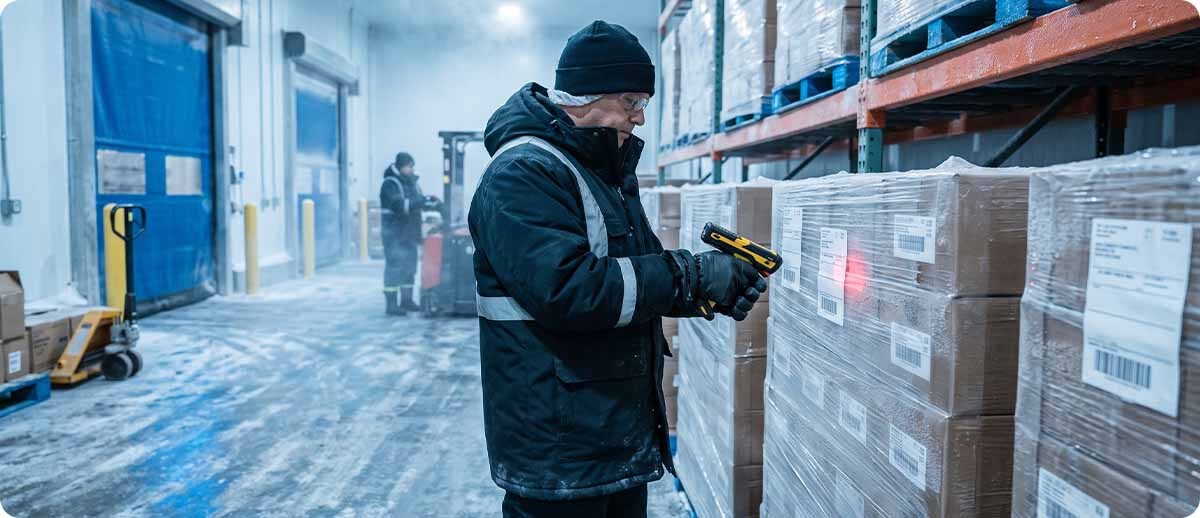
- Test in the real environment. Washdown, condensation, and cold rooms are where cheap labels and consumer devices fail.
- Run a mock request. Pick a lot at random and see how long it takes to pull every record for it. The target is well under 24 hours.
- Fix what breaks, then write it into your traceability plan.
Phase 3 · Early 2028
What Needs to Be Done Before July 2028?
- Roll out to every covered product and line, using the setup you proved in the pilot.
- Train every shift, including temps and weekend crews, since they're the ones scanning.
- Run a second mock request across several products and suppliers.
- Finalize your written traceability plan and make sure someone owns it.
On the Floor
Hardware That Holds Up in a Food Plant
What Hardware Do Food Plants Need for FSMA 204?
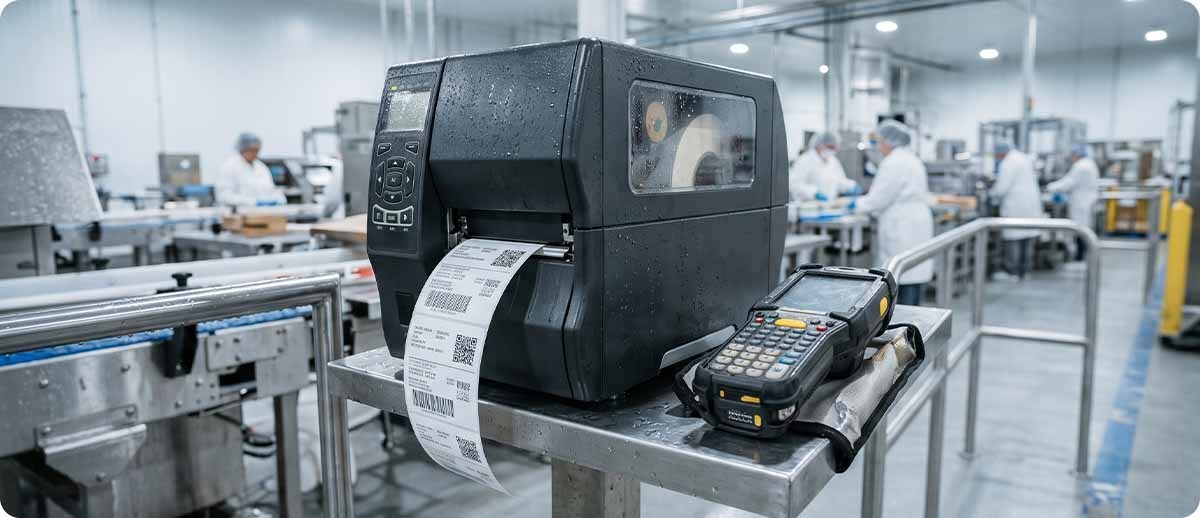
Most plants need three things: rugged mobile computers or scanners at receiving, the line, and shipping; industrial or desktop label printers where lot labels get printed; and labels that stay readable through the cold chain. Food plants are hard on all three. Our post on why warehouse scanners fail on the food production floor covers washdown and sanitizer damage, and barcoding in the freezer covers what happens at -20°F.
Capture
Mobile Computers
Sealed, washdown-rated handhelds with a 2D imager that reads damaged or frosted labels. Freezer-rated versions are built for work in cold rooms.
Label Printers
Thermal transfer printers at the line print lot labels on demand, so the TLC on the case always matches the record in your system.
Label
Durable Labels
Synthetic labels with cold-temperature adhesive hold up to condensation and freezer storage far better than paper direct thermal stock.
You can browse our mobile computers, barcode printers, and thermal printer supplies, but the right mix depends on your floor. That's worth a conversation before you buy.
Can You Meet FSMA 204 With Paper Records?
Technically, the rule doesn't require electronic records. But when FDA asks for records in an investigation, you may need to produce an electronic, sortable spreadsheet within 24 hours. Pulling that together from clipboards and binders across several shifts is slow and error-prone. Barcode scanning gets the data into a system the moment it happens, which is what makes a 24-hour turnaround realistic.
FAQ
Quick Questions
Could the FSMA 204 Date Move Again?
It's possible, but don't plan on it. The July 20, 2028 date comes from a congressional spending restriction, and industry voices at the October 2026 produce show called another delay unlikely. Build your plan around 2028 and treat any extra time as a bonus.
Do We Need RFID for FSMA 204?
No. The rule doesn't require any specific technology. Barcodes, especially GS1-128 and 2D codes that carry the lot code, work well for most plants. RFID can speed up receiving and counts in high-volume operations, but it's an upgrade, not a requirement.
Does FSMA 204 Apply If We Only Store or Distribute Food?
Yes, if you hold foods on the Food Traceability List. Distribution centers and cold storage warehouses still have receiving and shipping events to record, and they need to pass the lot code along to the next customer.
What Does FSMA 204 Mean for Egg Packers and Cheese Makers?
If you pack shell eggs or make soft or semi-soft cheese, you're covered. Egg packers record receiving, packing, and shipping events and assign a traceability lot code when eggs are packed. Cheese makers assign a new lot code to each batch of finished cheese, since making it counts as transformation, and record the product, quantity, and date with it. Both need durable case labels that carry that lot code through cold storage.
Does the New Small Business Policy Cover Food Processors?
No. FDA's October 2026 draft policy is for restaurants and retail food establishments with $250,000 to $1 million in average annual food sales. It doesn't change what manufacturers, processors, packers, or distributors have to do.
FSMA 204 isn't a scramble yet, and it doesn't have to become one. A pilot line in 2027 and a few mock records requests will tell you more than any checklist. If you'd like help mapping your tracking events or choosing hardware that will survive your floor, reach out to Midwest Barcoding Solutions. You can also see how we approach projects like this on our barcoding solutions and services page.
Keep Reading
Customers Also Checked These Out